
Reviewed · DERRY-LONDONDERRY TOURS
Peacemakers Museum Entry Ticket
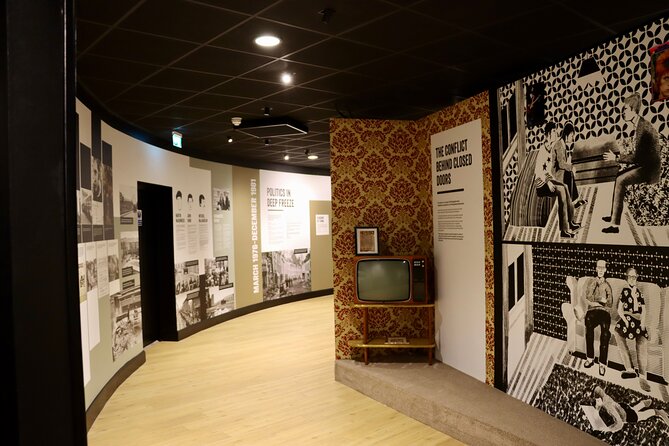
If you want to understand how Northern Ireland’s conflict shifted from violence to a political settlement, the Peacemakers Museum in Derry-Londonderry is a smart place to start. It covers August 1972 through May 2007, so you follow the story through the messy years and into the peace process.
I especially like the mix of artefacts and oral history, which helps the timeline feel real instead of abstract. I also like the audio guide options, available in English, Spanish, French, German, and Italian, so you can match the pace to your brain.
One thing to plan for: there’s a lot to read and listen to. With an average visit around 1 hour 30 minutes, you may feel a bit rushed if you try to see everything at full speed.
Key highlights before you go
- A guided-by-design timeline from August 1972 to May 2007, focused on how conflict became the peace process
- Audio guide in five languages, plus a written guide in English for a clearer thread
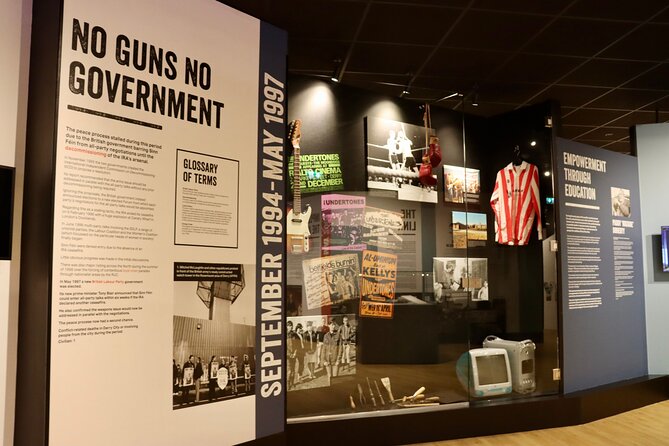
- Real artefacts, oral history, and archive footage, not just big wall text
- Interactive displays that help you make sense of how decisions played out on the ground
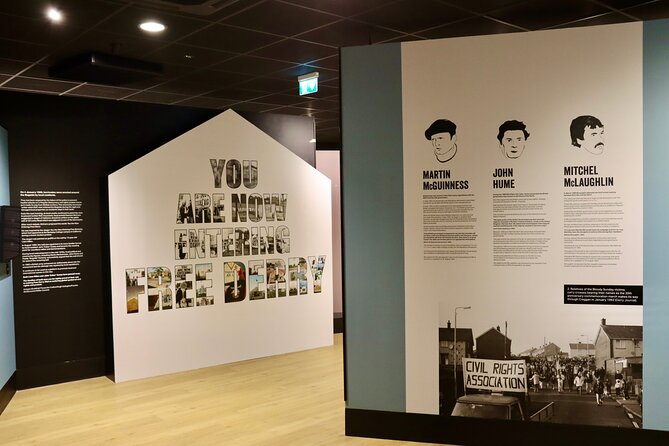
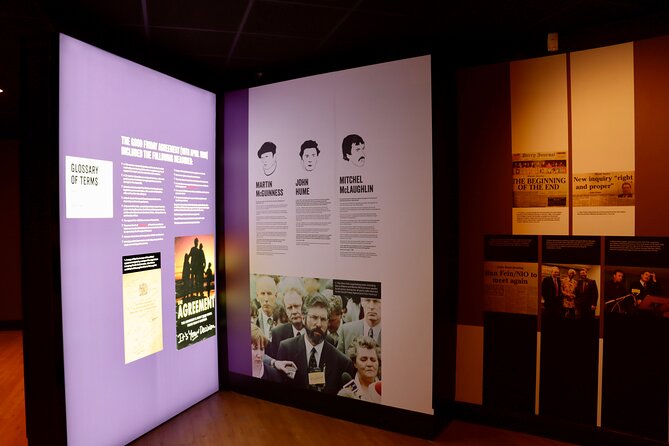
- The Good Friday Agreement story, including the roles of John Hume, Martin McGuinness, and Mitchel McLaughlin
- Powerful and challenging, so give yourself time to slow down when it gets heavy
Your ticket for about $11: what you get and why it feels worth it
At about $10.97 per person, the Peacemakers Museum ticket is priced like a solid, local admission, not a tourist trap. You’re also paying for structure. This place is built to explain a complicated period in a way you can follow without needing a political science degree.
The admission includes a written guide in English and an audio guide available in English plus Spanish, French, German, and Italian. That matters because the museum’s subject is dense. Having audio support means you can keep moving while still absorbing the meaning. It also helps if you’re tired from walking around Derry, because you can shift between reading and listening.
You’ll also get a mobile ticket, which is handy in a city where you might be bouncing between stops. And it’s a “no extra fees” kind of ticket, with all fees and taxes included.
The main “cost” is time and mental energy. The museum is not light entertainment. It’s designed to help you understand how people got from conflict to consent and what the consequences were for daily life in the area. If you’re in for a quick snack-and-swipe attraction, this won’t be that.
A few more Derry/Londonderry options side by side
- IRA Troubles Conflict Private Tour Museum Graves Murals and Political Analysis
★ 5.0 · 67 reviews - Titanic Museum and Whiskey Distillery Exploration with Tasting
★ 4.5 · 25 reviews - Belfast City Sightseeing Tour Including Titanic Museum | 6 Hours
★ 4.5 · 9 reviews
August 1972 to May 2007: how the museum frames the peace process
The core idea here is simple: the Troubles did not turn into peace overnight. The museum lays out how the conflict evolved into the peace process, and how both the violence and the negotiations affected the local area.
You’ll see the story treated like a chain of cause and effect:
- how conditions formed,
- how the Agreement was reached,
- how it was implemented,
- and what it might mean for the future of the island.
That focus on “what happened next” is one reason this museum works for visitors with different starting points. If you only know the headline events, you get a clearer timeline. If you know some of the key moments already, you’ll still benefit from seeing how the agreement period is presented as an ongoing set of steps, not a single turning point.
Another useful aspect is the emphasis on consent as the political template for resolving the conflict. Even if you’ve heard the phrase before, a museum setting makes it easier to connect the concept to real decisions and real impacts.
Inside the exhibits: artefacts, oral history, archive footage, and interactive stations
What makes the Peacemakers Museum more than a collection of dates is how it mixes media. You’re not stuck staring at one type of display the whole time.
Expect to encounter:
- artefacts, which anchor the story to physical evidence of everyday life and conflict-era reality
- oral history, where people’s perspectives help you understand the human side of events
- archive footage, which gives you visual context and helps the timeline feel less abstract
- interactive features, which turn parts of the story into something you can work through, not just observe
In a museum like this, the key question for you is: will it help you remember what you see? This kind of variety usually does. When a story is told with only text, it can blur. With artefacts, audio, and video working together, the important moments are easier to recall afterward.
It also helps you read the museum in layers. You can move faster if you’re just trying to get the overview. Or you can slow down and linger on certain rooms or themes using the audio guide. Since the visit averages around 1.5 hours, you can make a practical choice: hit every section quickly, or give more attention to the areas that matter to you.
One caution: this is a place with real density. If you’re sensitive to heavy themes or you prefer lighter attractions at the end of the day, plan your timing so you’re not exhausted when you walk in.
The Bogsiders and the Good Friday Agreement: John Hume, Martin McGuinness, Mitchel McLaughlin
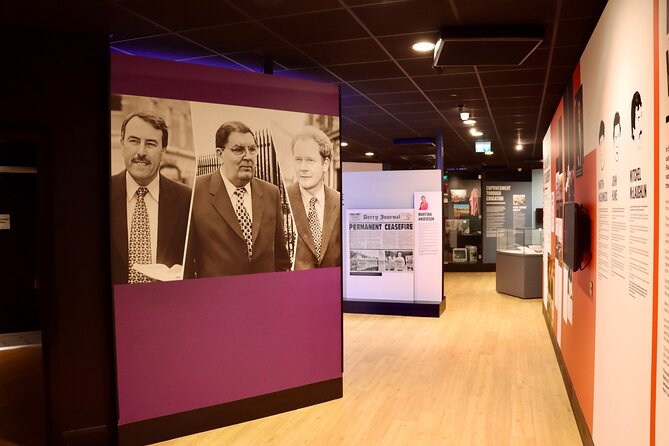
A big part of the museum experience is the spotlight on three Bogsiders: John Hume, Martin McGuinness, and Mitchel McLaughlin. The museum positions them as key figures in creating the conditions that led to the peace many people enjoy today.
Why this matters for you as a visitor is that it turns a big political story into recognizable human roles. Even if you don’t know Northern Ireland’s political landscape, you can still track who influenced decisions and what “leadership” looked like in a turbulent era.
The museum also connects their influence to the 1998 Good Friday Agreement, which is presented as a political template for resolving the conflict and shaping the future based on the principle of consent. That’s an important theme because it explains that peace was not just the absence of violence. It was a framework, and frameworks have consequences and supporters and critics.
If you want to get the most out of this section, don’t treat it like trivia. Use the audio guide, then pause for a few seconds after each key figure’s area. Ask yourself what the museum is implying about how trust and negotiation took shape over time.
More of Derry-Londonderry:
- Private Guided Walking Tour in Derry City
★ 5.0 · 635 reviews - Derry City: The troubles Bogside walking tour
★ 5.0 · 503 reviews - Walking Bogside History Tour in Guildhall
★ 5.0 · 280 reviews - Derry City: The Bloody Sunday Story – Walking Tour
★ 5.0 · 186 reviews
Your 1.5 hours in Derry: pacing tips that prevent you from missing the point
A typical visit is listed at about 1 hour 30 minutes. That’s a realistic target, but I’d treat it as a baseline, not a hard rule. This museum has a lot going on. You might spend less time if you skim. You might need more if you stop to listen carefully or re-read sections.
Here’s how I’d pace it so you leave feeling informed, not overwhelmed:
- Start with the audio guide and use it like a steering wheel. Let it carry the chronology while you glance at artefacts.
- If you hit a section with extra interactive elements, pick one to focus on deeply. Don’t try to do everything.
- Expect that the museum can feel emotionally intense. Build in a moment to step back instead of rushing through the most difficult exhibits.
Also, plan for breaks. Even though food or drink is not included with the ticket, there is a chance to grab a bite on-site. If you’re making a full day of Derry, a lunch stop nearby can keep your energy steady so the museum lands well instead of ending in sensory overload.
One more practical note: the opening hours are Monday to Friday, 9:30 AM to 5:00 PM. So you’ll want to avoid arriving late in the day. If you walk in near closing, you’ll feel the squeeze.
How to pair it with other Derry history without doubling up
Peacemakers Museum is built around August 1972 to May 2007, so it naturally overlaps with the Troubles era in a more advanced phase. If you’re building a “Troubles timeline” trip, it helps to think in ranges.
A smart approach is to see an earlier overview first, then let Peacemakers handle the years closer to the peace process. One common strategy is visiting the free Derry museum first, which covers the earlier period from the 1960s into the early 1980s, then returning to Peacemakers for what comes next.
That sequencing works because it reduces the “wait, how did we get here?” feeling. You start with earlier context, then you follow the path into negotiations and implementation.
If you don’t do that, you can still enjoy Peacemakers. You’ll just need to accept that you’re learning the arc in real time. The museum’s structure helps, but it can’t cover every early detail in a short visit.
Practical hours, access, and the few rules you should know
The museum’s listed opening hours are Monday to Friday, 9:30 AM to 5:00 PM, running across 07/29/2024 to 02/16/2027. Because you’re working with set days and limited afternoon time, I’d plan your visit earlier rather than later.
Logistics are straightforward:
- Your ticket is a mobile ticket.
- It’s near public transportation, which is helpful if you’re also moving around Derry by foot and bus.
- Service animals are allowed.
- It notes that most travelers can participate.
One policy detail matters for planning: the ticket is non-refundable and cannot be changed if your plans shift. So only lock it in if you’re pretty confident your day is intact.
Should you book Peacemakers Museum entry?
Book it if you want a clear, guided explanation of how the Troubles moved into peace, with a focus on reconciliation and real-world impacts. The ticket price is modest for the amount of material you get, and the audio guide options in five languages make the experience workable even if you’re not a history buff.
Skip or adjust your expectations if you prefer fast, light attractions. This museum asks you to slow down. It can feel emotionally heavy, and it asks you to take in a lot of information in a limited time.
If you’re in Derry for a few days and you care about understanding the place, not just seeing sights, I’d call this a worthwhile stop. Plan a calm pace, use the audio guide, and don’t rush the most meaningful sections.
FAQ
How much is the Peacemakers Museum entry ticket?
The ticket price is listed as $10.97 per person.
How long should I plan for a visit?
The experience duration is listed as about 1 hour 30 minutes.
What languages are available for the audio guide?
The audio guide is offered in English, Spanish, French, German, and Italian.
Is there a written guide?
Yes. A written guide is offered in English.
What are the opening hours?
The museum is open Monday to Friday, 9:30 AM to 5:00 PM, with dates listed from 07/29/2024 to 02/16/2027.
Is food or drink included with the ticket?
No. Food or drink is not included.
Is the museum accessible and near transportation?
The listing says it is near public transportation, service animals are allowed, and most travelers can participate.
Can I cancel or change my ticket?
No. The ticket is non-refundable and cannot be changed for any reason.
Just added around Derry/Londonderry
- Derrie Danders: A Self-Guided Audio Tour of the Riverside and South City★ 5.0 · 3 reviews
- Derrie Danders: Wander around the Waterside on a self-guided GPS audio tour★ 4.5 · 3 reviews
- Full Day Private Luxury Tour of Causeway Coast (Giants Causeway)★ 5.0 · 5 reviews
- Bloody Sunday and Bogside Murals Walking Tour★ 5.0 · 6 reviews
- Giant’s Causeway & Game of Thrones (luxury Private Tour)★ 5.0 · 15 reviews
- Herstory Derry Tour★ 5.0 · 16 reviews
- Derrie Danders: Unveiling Derry’s Dark & Haunted Past Audio Tour★ 4.5 · 3 reviews
- Derrie Danders: A Self-Guided Audio Tour of the Walled City’s West★ 4.5 · 6 reviews
Derry-Londonderry Tours, compared.
Discover the City Walls – Small Group Public or Private Tour
Read our review →

Derrie Danders: Highlights of the Walled City a Self-Guided Audio Tour
Read our review →

Giant’s Causeway & Game of Thrones (luxury Private Tour)
Read our review →
Full Day Private Luxury Tour of Causeway Coast (Giants Causeway)
Read our review →
Derrie Danders: Unveiling Derry’s Dark & Haunted Past Audio Tour
Read our review →
Derrie Danders: A Self-Guided Audio Tour of the Riverside and South City
Read our review →Browse the lists this tour appears in