
Reviewed · THE TROUBLES HISTORY TOURS
Belfast Walking Tour: City Centre History, Troubles & Stories
This Belfast walking tour is interesting because it connects the city’s big themes, politics and identity, with very real street scenes you can point at and walk through. I especially like how Corey makes the Troubles-era stories understandable without turning them into a lecture. One heads-up: it runs outdoors most of the time, so good weather matters.
You’ll cover a compact city-centre loop at an easy pace, with stops around 10 minutes each, plus a longer breather at Belfast City Hall. It’s the kind of walk that helps you sort the layout of Belfast fast, so the rest of your trip feels less like guesswork.
If you only want happy, postcard stops and nothing heavy, this route may feel like a lot. But if you want Belfast explained through landmarks and local stories, this is a smart place to start.
Key highlights worth your steps
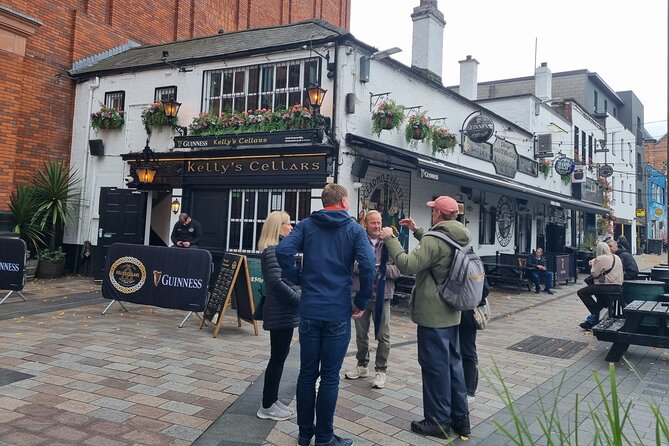
- City-centre orientation in 2 to 3 hours, built for first-timers
- Corey’s storytelling, with local context behind major landmarks
- Free-entry stops, including City Hall and the Linen Hall Library
- Big Fish stop included, plus the classic nose-rub for luck
- Peace and future-focused sculptures to end the walk thoughtfully
- Small group size (max 15), which makes questions and pacing easier
Meeting at Belfast City Hall, and why this route starts smart
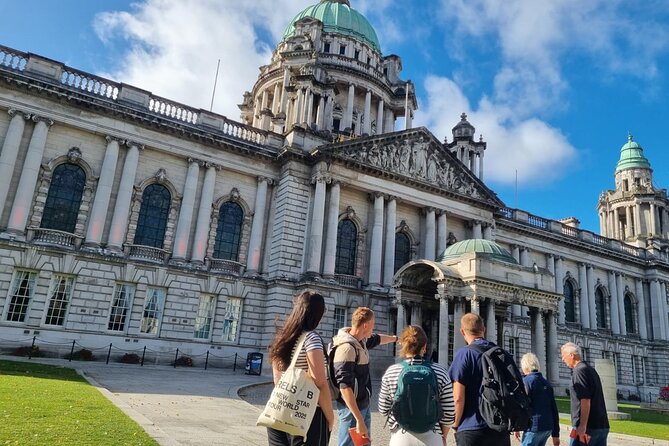
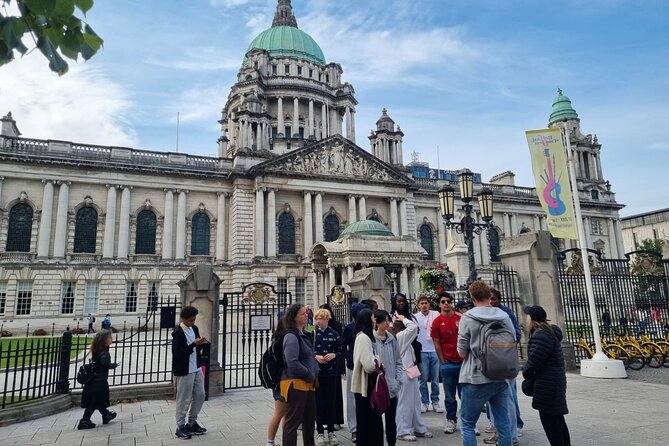
You begin at Belfast City Hall, right in the heart of the city-centre. That’s a good choice because City Hall is not just a pretty building, it’s a quick mental anchor. Once you understand what’s around you, the rest of Belfast feels easier to read.
From there, you move through recognizable civic spaces and then gradually shift into older Belfast industrial life, then on to the Cathedral Quarter area, and finally toward modern symbols of hope. It’s not random. The route builds a sense of cause and effect, how the city’s identity has been shaped over time.
Expect a walk that’s long enough to feel like a proper activity, but short enough that you can still manage dinner plans afterward. Also, this is near public transportation, so if you get turned around in Belfast, you’re not stuck.
Other Troubles history tours, told plainly:
- Belfast’s Political Mural Taxi Tour
★ 5.0 · 1,180 reviews - Belfast Troubles Tour: Walls and Bridges
★ 5.0 · 853 reviews - Belfast Political Tour-Conflicting Stories Walking Tour
★ 4.5 · 459 reviews
Belfast City Hall and Donegall Square: politics you can see
The tour kicks off with Belfast City Hall, where you spend about 20 minutes. Even if you only have time for quick looks, it’s the kind of place where you can see how civic pride and public power get carved into stone, stained glass, and design details.
Next is Donegall Square, a short stop where you “stand at the crossroads” of daily life. This is where the tour helps you connect buildings to choices. In a city like Belfast, the story isn’t just what happened historically, it’s how communities have interpreted those events and lived with the results.
Practical note: these stops are in busy areas. If you’re trying to take photos without getting shoved by foot traffic, keep your phone steady, and plan to take pictures in the natural gaps between pedestrians.
The Linen Quarter and Linen Hall Library: how a small city went global
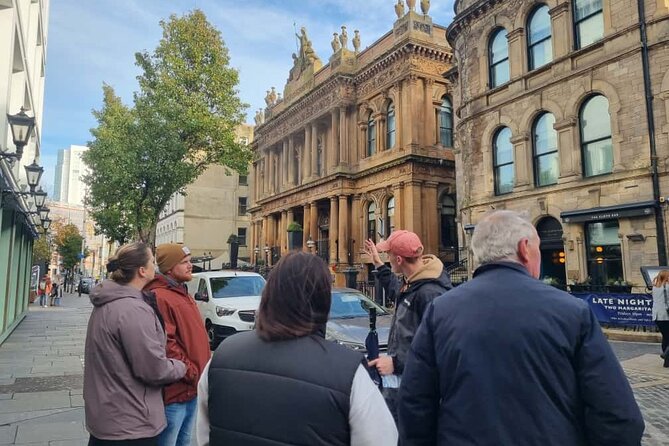
Then you shift gears into the Linen Quarter and the story of when Belfast was the linen capital of the world. This is one of my favorite parts of the walk because it reminds you Belfast is not only about conflict. The city also grew through trade, craftsmanship, and industrial ambition.
You’ll spend a short time here, but the impact is big. The idea of “Linenopolis” is the kind of nickname that stops you cold, because it captures how a local industry became a world brand. Even if you only know a little about Ireland’s economy, this section gives you a starting frame for why Belfast looked and acted the way it did.
After that comes Linen Hall Library, Belfast’s oldest library, with a stop of about 10 minutes. A library might sound quiet compared to City Hall, but it makes sense in the overall story. Knowledge, archives, and civic culture are part of how cities remember themselves and how debates keep moving long after industries change.
If you’re a curious reader type, you’ll likely enjoy this stop more than the average “photos and go” sightseeing. If not, just treat it as a calm reset before the cathedral streets.
Cathedral Church of St. Anne and the Cathedral Quarter vibe
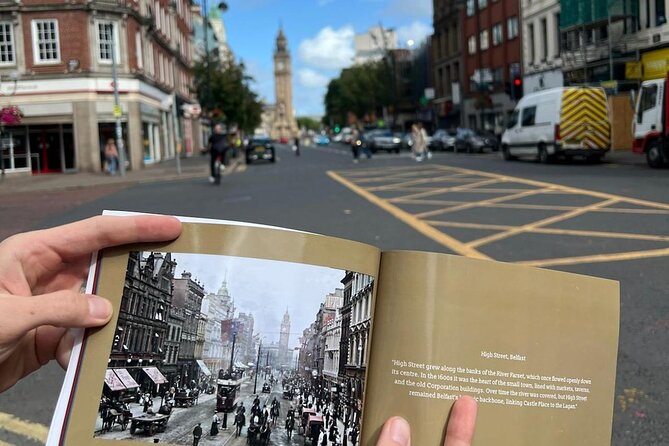
The walk continues at Belfast Cathedral, the Cathedral Church of St. Anne in the Cathedral Quarter. You’ll get about 10 minutes here. It’s a strong visual contrast with the earlier civic and industrial stops, and it gives Belfast a different kind of center.
The tour frames the cathedral as a place where faith and art meet, and that’s the right lens. Even if you’re not religious, you can still appreciate the way architecture signals how communities gathered, expressed identity, and built meaning around shared spaces.
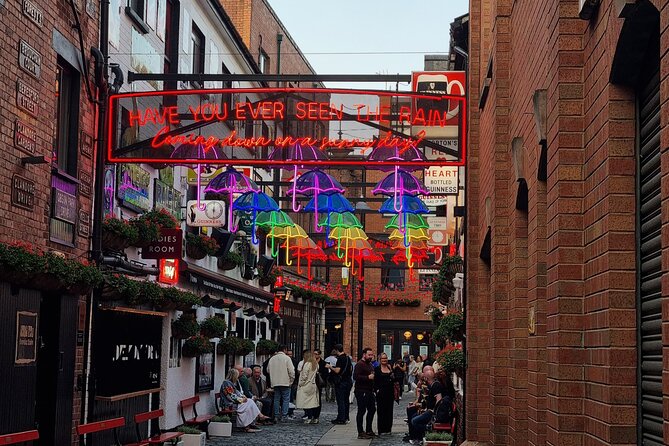
This stop is also useful for orientation. The Cathedral Quarter is one of those areas where you can feel the city’s creative energy, without needing to understand every detail at once. You leave with a better sense of where to wander next on your own.
A few more Belfast options side by side
- A History of Terror – Belfast City Centre Walking Tour
★ 5.0 · 2,883 reviews - Private Political History & Murals Tour Belfast
★ 5.0 · 182 reviews - Belfast Political/history/troubles private taxi/cab tour
★ 5.0 · 69 reviews - 1 Hour Express Belfast Taxi/Cab Tour History, Murals, Troubles
★ 5.0 · 17 reviews
Albert Memorial Clock Tower, Big Fish, and Belfast’s sense of humor
Now you hit some of Belfast’s most recognizable street landmarks.
First is the Albert Memorial Clock Tower, often described as the leaning tower. The tour connects it to Prince Albert and Queen Victoria, but it doesn’t keep it stuck in royal history. You also hear tales about sailors and nightlife that once swirled around that area. That helps the tower feel less like a monument and more like a backdrop to real human life.
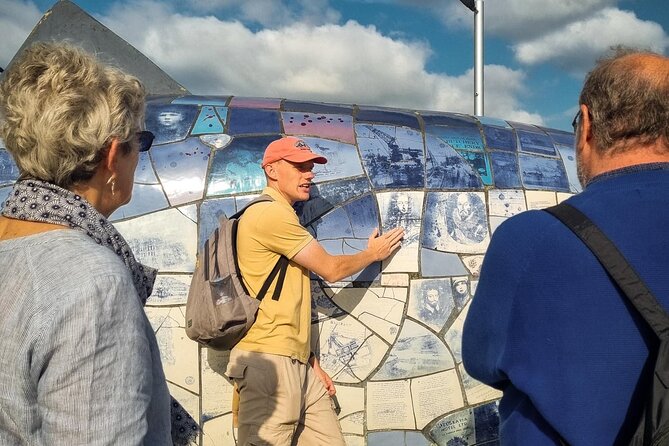
Then comes one of the fun stops: Big Fish, the Salmon of Knowledge covered in ceramic tiles. You’ll spend about 10 minutes here and you’re also nudged to rub its nose for luck, because yes, that’s part of the local charm. It’s silly in the best way, and it gives you something tangible to do while you listen.
This section works especially well if your feet are starting to feel the effort of a walking tour. Humor breaks the tension. And in a route that includes the Troubles and peace themes, the lightness matters.
Beacon of Hope and Spirit of Belfast: how the tour ends with forward motion
The last stretch shifts from older structures to modern symbolism.
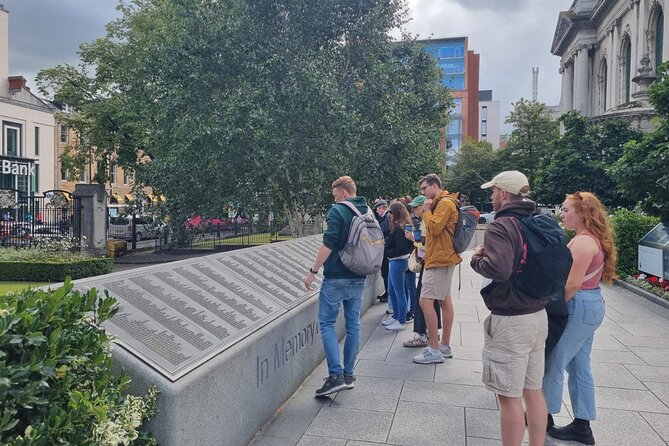
You’ll pause at Beacon of Hope, a moving sculpture meant to represent peace, resilience, and a brighter future Belfast has built after its troubled past. This isn’t a “quick photo and run” stop. It’s designed to slow you down for a moment and let the earlier context settle.
Then you finish at Spirit of Belfast, an abstract sculpture of steel and light. The tour presents it as reflecting the city’s energy, creativity, and future-looking spirit. I like this ending because it doesn’t leave you stuck in the heavy chapters. You finish with a sense of direction.
If you’re someone who doesn’t want emotional stops, just know that these final monuments are the payoff. They’re how the walk turns from facts and landmarks into meaning.
Corey’s guide style, small-group pacing, and why headsets matter
The biggest reason this tour earns such strong praise is the guide.
Corey is local, and that comes through in how he explains Belfast. The tone tends to be friendly and story-driven, with humor mixed into the context. You also get room for questions, and that can make a big difference in a city with a complicated past.
One practical upgrade that really changes the experience is the use of audio headsets. In a city centre, you get traffic noise and random conversations from passersby. Headsets help you hear clearly without having to constantly stand shoulder-to-shoulder. It means you can take photos, check your bearings, and keep walking while you listen.
Because the group maximum is 15 travelers, you generally avoid the worst problems of large tours. In practice, you can move at a steady pace and still feel like the guide is talking to your actual group, not performing into the crowd.
What each stop gives you, beyond the postcard view
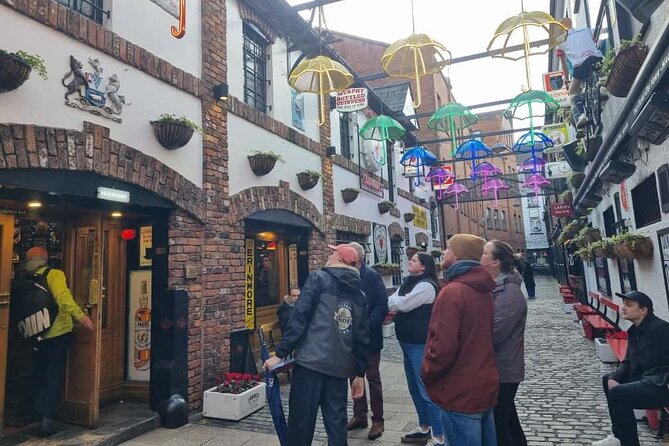
Here’s the value of this specific set of locations.
- City Hall gives you the civic and political center, so you understand where power was meant to live.
- Donegall Square gives you the human scale, the places where life happens around major decisions.
- Linen Quarter adds the economic backbone, Belfast as a place that built a world-famous industry.
- Linen Hall Library adds memory and culture, how a city preserves its thinking.
- St. Anne’s Cathedral adds identity and art, showing how communities built shared meaning.
- Albert Memorial Clock Tower and Big Fish add local personality, history plus everyday Belfast character.
- Beacon of Hope and Spirit of Belfast give you closure, a view of what came after conflict and what’s next.
This is why the tour works as an introduction. It doesn’t just show you sights. It gives you a framework for understanding what you see later.
Price and value: $30.16 for a 2 to 3 hour city-centre loop
The price is listed at $30.16 per person, for about 2 to 3 hours. For that money, you’re paying for guided interpretation of multiple landmarks in a compact area, not just walking from point to point.
The other value piece: the tour includes free admission tickets for the featured stops. That means you’re not stacking up extra entry fees while you’re already paying for the guide. You still get the payoff of structured sightseeing, with time built in at each location.
Also, the tour uses a mobile ticket, which is convenient when you’re in a city and don’t want to deal with paper. Add the fact that it’s offered in English, and you’ve got an easy setup for most visitors.
Could you walk this route on your own? Sure. But you would miss the connective tissue, the why behind the where. In Belfast, that’s the difference between seeing buildings and understanding the city.
Who should book this Belfast walk, and who might want a different option
I’d tell you to book this tour if:
- You want a first-night or first-full-day introduction to Belfast.
- You like history, but you prefer it told through street-level stories.
- You want to understand the city’s Troubles-era chapters without being overwhelmed.
- You appreciate a guide who shares local details and keeps things moving.
I’d consider another option if:
- You’re looking for a strictly “light and fun” Belfast tour only.
- You hate walking for 2 to 3 hours, even with short stops.
- You’re traveling on a very tight schedule with no flexibility for weather and timing.
Because this experience requires good weather, it’s also wise to check forecasts. If it’s going to be miserable, you may feel it in your mood even if the guide keeps the stories coming.
Should you book this Belfast Walking Tour: my practical take
Yes, I think you should book it if you want a smart, structured introduction to Belfast. The route covers civic power, industrial legacy, faith and art, local landmarks with character, and a thoughtful finish at peace-focused monuments. That mix is hard to replicate on your own without a lot of reading and context.
If you’re worried about the Troubles topic feeling heavy, don’t be. The walk is built to explain, not shock. And the ending in hope-related sculptures makes the emotional arc feel more complete.
One last tip: go in with curiosity, not bingo-card expectations. If you listen for the connections between stops, you’ll come away with Belfast that feels more real and more understandable.
FAQ
How long is the Belfast Walking Tour?
The tour lasts about 2 to 3 hours.
How much does the tour cost?
The price is $30.16 per person.
Where does the tour start?
It starts at Belfast City Hall, Donegall Square N, Belfast BT1 5GS, UK.
Is the tour in English?
Yes, the tour is offered in English.
Are entry tickets included for the stops?
Yes, each listed stop includes admission tickets marked as free.
What group size should I expect?
The tour has a maximum of 15 travelers.
Does the tour run in poor weather?
It requires good weather. If canceled due to poor weather, you’ll be offered a different date or a full refund.
Can I get a refund if I cancel?
Free cancellation is available, with a full refund if you cancel at least 24 hours before the experience starts.
More Walking Tours in Belfast
- Best of Belfast Walking Tour
★ 5.0 · 399 reviews - Belfast Eclectic Walking City Center Experience, The Marti Way
★ 5.0 · 348 reviews - Belfast Troubles Murals Street Art and Peace Wall Walking Tour
★ 5.0 · 163 reviews - The Real Eclectic Belfast City Walking Tour/Experience.
★ 5.0 · 152 reviews
Just added around Belfast
- Epic Escape Room Adventure to Save King’s Landing in Belfast★ 5.0 · 3 reviews
- Private Guided Walking Tour in Belfast★ 3.5 · 3 reviews
- Experience the Antrim Coast and the Land of Giants – Private Tour★ 5.0 · 3 reviews
- Game of Thrones scene location inc Giants causeway from Belfast★ 5.0 · 3 reviews
- Private Coast Tour in Belfast★ 5.0 · 3 reviews
- Belfast to Dublin Transfer★ 5.0 · 3 reviews
- Giants Causeway Tour From Belfast including Game of thrones sites★ 5.0 · 3 reviews
- Shore Excursion: Giants Causeway and Belfast City Tour★ 2.5 · 3 reviews