
Reviewed · THE TROUBLES HISTORY TOURS
Belfast Troubles Tour: Walls and Bridges
Belfast’s Walls and Bridges tour is interesting because it teaches you how a city can hold two stories at the same time, and still move forward. I especially like the stop at Belfast City Hall, with its striking dome and marble interiors, and the chance to properly understand the Peace Wall and why people built it in the first place. Guides such as Arthur and Steve bring a personal, local tone, so the walk feels less like a script and more like real Belfast conversation.
One consideration: this is not a light, kid-friendly sightseeing stroll. The tour includes graphic content, and it also involves standing close to sensitive, heavily politicized sites, so come with respect and an open mind.
Quick take on Walls and Bridges (what you’ll remember)
- City Hall first, so you learn the city before the conflict (and you get quick inside time).
- Peace Wall context with clear explanations, plus time to study details and take photos.
- Murals and public art in the same route as the conflict sites, so you see the full picture.
- Headphones may be provided, which helps you follow the story on a busy walking route.
- A Belfast native guide with lived perspective, often delivered with humor and seriousness side by side.
- A thoughtful finish at First Presbyterian Church and through Belfast Entries, not just another “walk past plaques” tour.
How Walls and Bridges turns a walking tour into a real sense of place
This is the kind of Belfast experience that rewards attention. You start with major landmarks, then you gradually move toward the places that shaped daily life during the Troubles. The goal is not just to list dates and events, but to help you see how physical barriers, religious identity, and community survival all shaped what people said, feared, and built.
The best part is pacing. Instead of rushing from one “headline” spot to another, you get a narrative arc: where Belfast started, how the city evolved, what the conflict changed, and what a future built on understanding can look like. Many people also like the tone balance. You’ll hear humor, but you’ll also get the sobering parts plainly explained.
This is also a walk that expects you to be present. It’s about listening to the guide and letting the streets do their work. If you’re the type who likes history facts, you’ll get those. If you’re the type who wants context for how people live, you’ll get that too.
Other Troubles history tours, told plainly:
- Belfast’s Political Mural Taxi Tour
★ 5.0 · 1,180 reviews - Belfast Political Tour-Conflicting Stories Walking Tour
★ 4.5 · 459 reviews - Political Taxi Tour Belfast (1-7 People)
★ 5.0 · 294 reviews
Starting at Belfast City Hall: marble, stained glass, and a quick wow moment
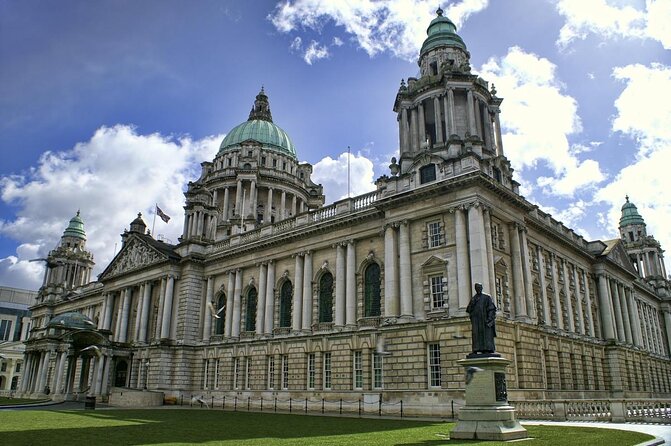
You meet at Belfast City Hall, and that matters more than it sounds. City Hall is a statement building in the middle of the city, and it gives you a strong visual baseline before you head into the harder material.
You’ll spend time at the dome, which rises to about 174 feet. Inside, the building is described as featuring three types of Italian marble, including Cipollino marble from Greece, along with stained glass windows that leave you with that simple reaction: wow, this is Belfast too. The practical value here is orientation. You get a sense of scale and civic pride before the tour shifts into community division.
The only drawback I’d flag is also the obvious one for an indoor stop: if you’re sensitive to crowds or tight spaces, go slowly. You’ll want to take in the architectural details, but you may need to manage your time for photos and movement.
Dan George’s modern Celtic sculpture: a sign you’re in Belfast, not just in history
After City Hall, you move through central streets to see a modern sculpture by Dan George set in the heart of the city centre. The description matters: it combines traditional Celtic design with themes of engineering, industry, and community.
I like this stop because it quietly reminds you that Belfast is not a museum of conflict. It’s a working city. This sculpture acts like a bridge in the route, connecting the architectural statement of City Hall to the street-level art and tensions you’ll see later.
If you’re in a hurry, this can feel like a brief photo stop. But take 3 to 5 minutes and actually look at the design, because it sets your eye up for the mural wall later.
International Wall of Murals on Divis Street: street art that isn’t background decoration
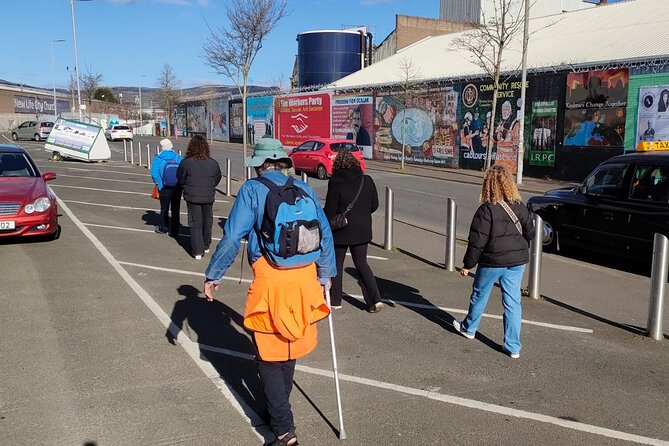
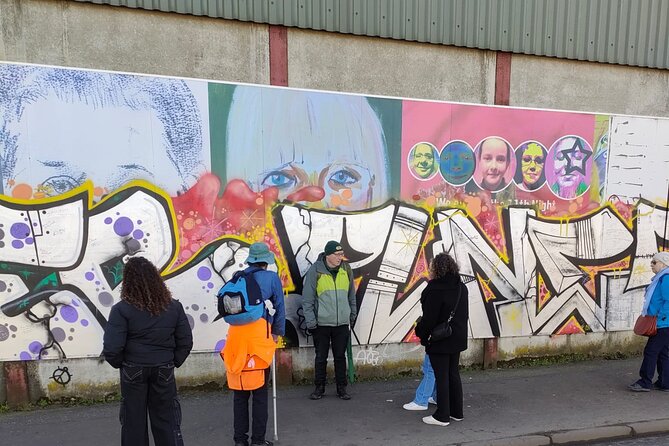
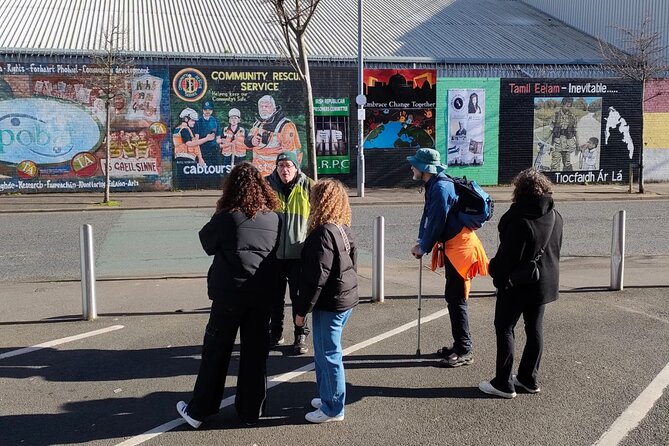
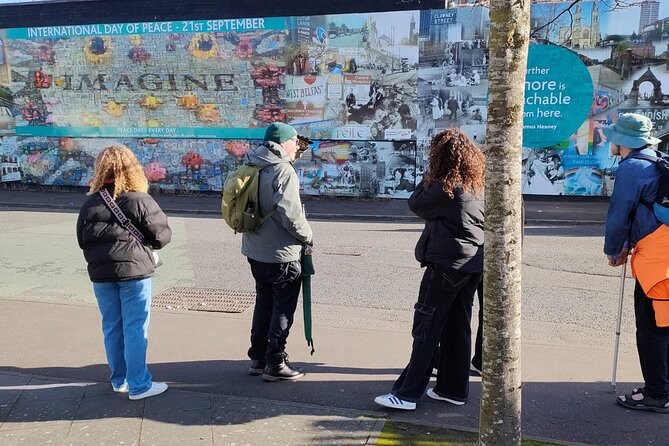
Next comes the International Mural Wall near the Peace Walls, including the area around Divis Street. Murals here are not just pretty street scenes. They are part of how communities tell stories, mark identity, and respond to the pressure around them.
You’ll get an easy walk and a clear chance to absorb the setting, and you’ll also hear why these murals matter in the wider Belfast conversation. The main value is that you see art placed in real neighborhoods rather than in a curated gallery space.
The only thing to watch is time. You’ll have a short window for this stop, so if you like street photography, use that first minute to find your angles and then listen.
More days out of Belfast:
- Titanic Belfast Entrance Ticket: Titanic Visitor Experience Including SS Nomadic
★ 4.5 · 3,698 reviews - Cab Tours Belfast Famous Black Taxi Tours
★ 5.0 · 3,633 reviews - Giant’s Causeway Day Trip from Belfast
★ 5.0 · 3,480 reviews - A History of Terror – Belfast City Centre Walking Tour
★ 5.0 · 2,883 reviews
The Peace Wall: what to look for, how it changes your view of the street
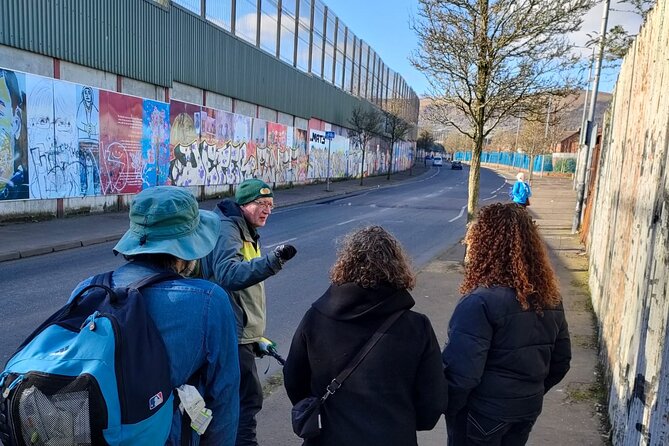
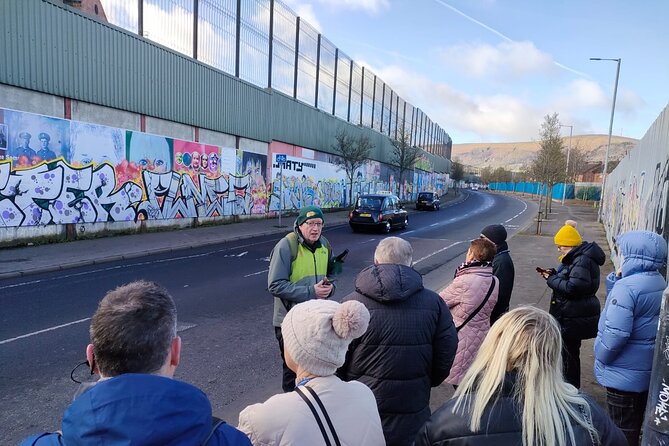
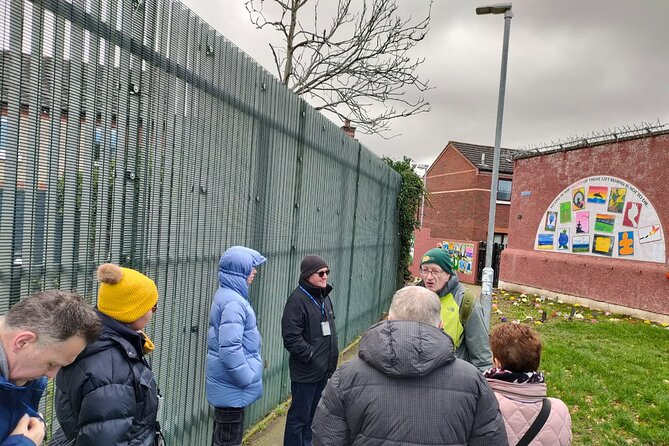
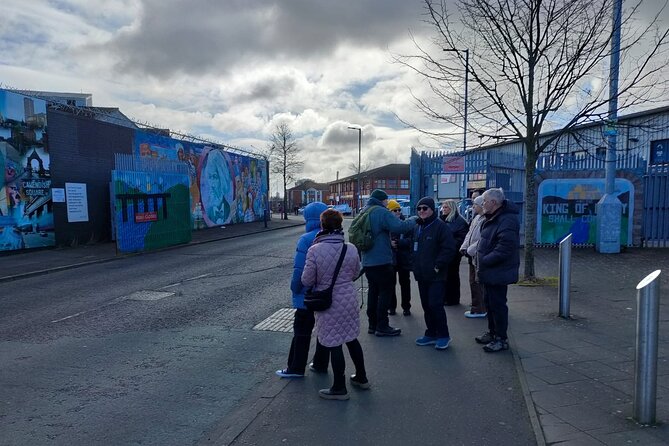
The Peace Wall is the emotional and visual centerpiece of the walk. It’s about 16 metres high and topped with mesh designed to stop petrol bombs. The guide’s explanation is what makes this stop hit harder than a quick photo.
This is where you start seeing Belfast as a city shaped by choices people made for safety and identity. I like that you’re given time to photograph and examine the walls up close, because the details are where the meaning lives. You’re not just told it exists. You learn how and why it became part of the landscape.
Possible drawback: this is a sensitive site, and the tour includes graphic content overall. Even if you already know the general story, expect some descriptions to be difficult to hear. If that’s a concern, decide in advance that you can handle it, and set a pace for yourself if emotions spike.
Albert Memorial Clock Tower: the leaning tower idea, plus a film connection
After the Peace Wall area, you pivot toward the Albert Clock Tower, Belfast’s own leaning tower feel. It stands around 113 feet tall and leans by about 4 feet from perpendicular. You’ll also see a statue of Prince Albert, and the guide ties it to the iconic film noir Odd Man Out, starring James Mason.
I like this stop because it gives you a break from the heaviness without pretending the heaviness doesn’t exist. And it’s not random fun trivia. The tower sits on the point associated with how Belfast was established, so you get a sense of time depth in the middle of a modern conflict narrative.
If you’re a film fan, this is one of the route moments that makes the city feel connected to the wider world. But even if you’ve never seen Odd Man Out, the architecture and the story about the crossing point can help you understand why Belfast’s core looked the way it did.
Cathedral Quarter and the texture of everyday Belfast
From the clock tower area, you walk into the Cathedral Quarter, described as Belfast’s newer, lively heart with colorful murals, entries, and lots of pubs and restaurants. You also get cobbled stones, which help the place feel older under your feet.
This stop matters because it shows you the “after” side of Belfast. The Cathedral Quarter has energy, and the guide’s framing helps you understand that energy is not the same as forgetting. It’s what happens when communities grow, trade, build, and share space again.
The main drawback is simple: pubs mean noise and crowds. If you’re trying to hear every word during this portion, move a touch away from the busiest edges so you can focus on the guide.
First Presbyterian Church: 1783 architecture, John Wesley, and civil freedoms
You finish with a calmer, more reflective stop at First Presbyterian Church, and the pacing here is smart. The tour points out the building as a historical anchor in Irish history, dating from 1783.
You cross the threshold and, based on the way the guide explains it, you get transported back to late 1700s Belfast. John Wesley preached from the pulpit, and the guide highlights the church’s elliptical shape. There’s also emphasis on the church members’ stands for civil and religious freedoms, which complicates any simple idea that religion alone equals division.
I find this stop powerful because it gives you another kind of context. Instead of only hearing about boundaries and hostility, you see how communities also fought for rights and used faith in public life. It also provides a practical reset before your final walking segment.
You’ll have time to explore and take photos, and entry to this site is included. A finishing walk through the surrounding streets also keeps the end feeling grounded rather than abrupt.
Belfast Entries: why these passageways change how you read the city
The final stretch takes you through the Belfast Entries, historic passageways you might miss if you were walking on your own. The whole point is that these narrow, tucked-in routes are part of Belfast’s physical story of revolution, intrigue, pubs, and everyday movement.
I like the Entries stop because it teaches you to notice what you normally ignore. When you’re in a new city, you tend to look straight ahead. Narrow passageways force you to slow down, look up, and understand how people used space differently in the past.
If you’re short on time in Belfast overall, this ending still feels worthwhile because it leaves you with a new skill: walking like a local, noticing the hidden connectors, and understanding why a city’s layout matters when conflict breaks out.
Duration, walking pace, and group size (so you can plan your day)
Plan for about 2 hours 40 minutes to 3 hours on foot. The route is described as requiring moderate physical fitness, which usually means steady walking and some time spent standing still for explanations.
You’ll also be in a group with a maximum of 16 travelers. That size is big enough for a lively atmosphere, but small enough that you can still pay attention and ask questions.
You should bring comfortable walking shoes, a layer for cool weather, and a phone camera if you like detailed photos. If you’re planning other sights on the same day, treat this as a “main event” segment, not something you tack on between meals.
What’s included in Walls and Bridges, and what you’ll spend in real life
The price is about $33.29 per person, and for a Belfast city walk that tackles the Troubles with a live guide, it can represent good value. Here’s why: the tour includes a local guide and a professional guide, and it’s also described as a private tour with your guide’s focus.
On top of that, most stops are listed with free admission tickets, including Belfast City Hall. First Presbyterian Church entry is included too. That reduces the “hidden extras” feeling you can get with walking tours where you’re constantly paying at each site.
If you want the Troubles story with real context, not just street-level commentary, the cost often feels more like a ticket to understanding than a typical sightseeing add-on.
Who should book this tour, and who should skip it
This tour is best for adults and older teens, since the minimum age is 14 and the tour is not aimed at children. If you want to understand Belfast through the eyes of a Belfast native, this is a strong choice.
Go for it if you:
- want a guided route that covers both landmarks and sensitive sites
- like your history explained with practical street-level context
- can handle serious topics and graphic descriptions
Consider skipping if you:
- want a purely light, family-friendly outing
- know you’re not comfortable with graphic content
- prefer only polished, surface-level sightseeing without emotional or political framing
Should you book Belfast Troubles Tour: Walls and Bridges?
Book it if you want the Belfast version of a “learn and walk” experience that treats the Troubles with seriousness while still leaving room for humor and the idea of moving forward. The route makes sense: start with City Hall for civic context, then go to murals and the Peace Wall for the conflict reality, and finish with First Presbyterian Church and the Belfast Entries so the city feels three-dimensional.
Skip it if graphic content would put you in a bad place, or if you’re visiting with someone who can’t handle emotionally heavy storytelling. If you do book, come prepared to listen. This isn’t just about seeing Belfast. It’s about understanding why Belfast looks the way it does.
FAQ
How long is the Belfast Troubles Tour: Walls and Bridges?
It runs about 2 hours 40 minutes to 3 hours.
How much does the tour cost?
The price is $33.29 per person.
What language is the tour offered in?
The tour is offered in English.
Is this tour private, and how many people are there?
It is described as a private tour, with a maximum of 16 travelers.
Is admission included for the stops?
Admission is listed as free for several stops, and First Presbyterian Church has admission included.
Is the tour suitable for children?
The minimum age is 14, and it is not aimed at children. The tour includes graphic content.
Can I cancel for a full refund?
Yes. There is free cancellation, and you can cancel up to 24 hours in advance for a full refund.
Just added around Belfast
- Private Guided Walking Tour in Belfast★ 3.5 · 3 reviews
- Epic Escape Room Adventure to Save King’s Landing in Belfast★ 5.0 · 3 reviews
- Experience the Antrim Coast and the Land of Giants – Private Tour★ 5.0 · 3 reviews
- Game of Thrones scene location inc Giants causeway from Belfast★ 5.0 · 3 reviews
- Belfast to Dublin Transfer★ 5.0 · 3 reviews
- Giants Causeway Tour From Belfast including Game of thrones sites★ 5.0 · 3 reviews
- Private Coast Tour in Belfast★ 5.0 · 3 reviews
- Shore Excursion: Giants Causeway and Belfast City Tour★ 2.5 · 3 reviews