
Reviewed · BELFAST CITY TOURS
A History of Terror – Belfast City Centre Walking Tour
This is interesting because it turns Belfast street corners into a guided timeline of The Troubles, from the political roots to the moments that still shape the city today. I also like that you get headsets and a local guide, so the story stays clear even when you are standing outdoors and the group is moving.
The trade-off is that this is a serious, sometimes emotional subject. You will spend more time listening than strolling, and a few stops focus on real loss of life, so it may feel heavy if you want light, forget-it-in-an-hour sightseeing.
Key things to know before you go
- Small group size and headset audio help you keep up without craning your neck
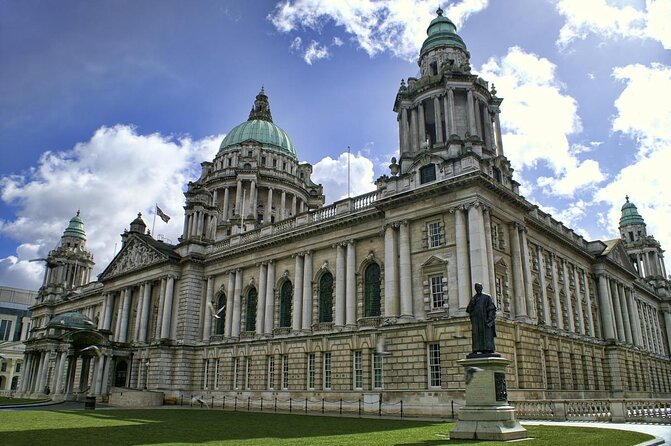
- Belfast City Hall opener gives you the political and historical context first
- Donegall Place covers a 1971 nightclub bombing and the Ring of Steel policing approach
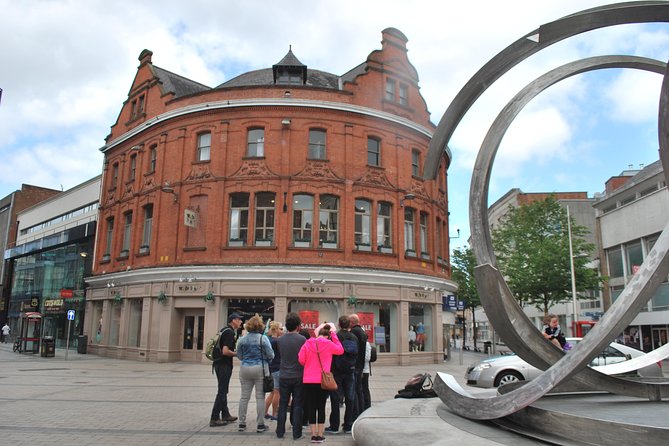
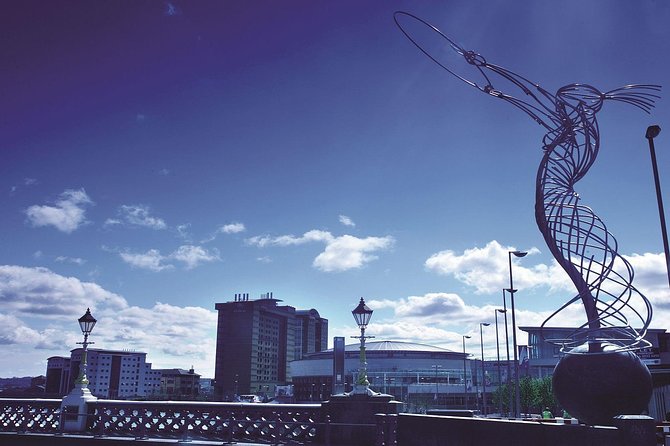
- Spirit of Belfast and the Onion Rings artwork connects symbolism to a key turning point in 1971
- Cathedral Quarter stop mixes regeneration, street art, and stories about the road to peace
- Ann Street and the police presence includes a look at policing changes and borders, including Brexit
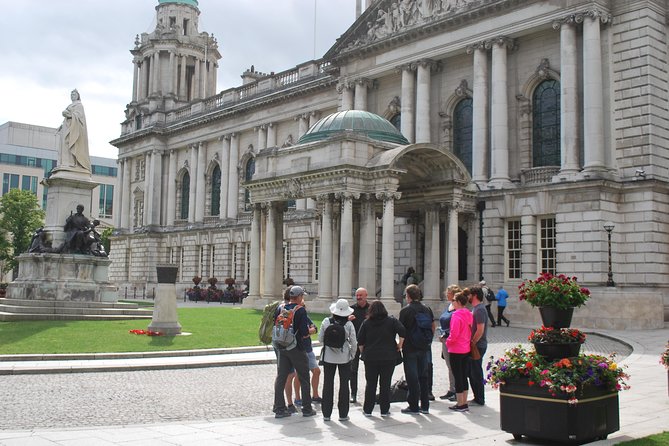
Start at Belfast City Hall, then get the context before the streets hit
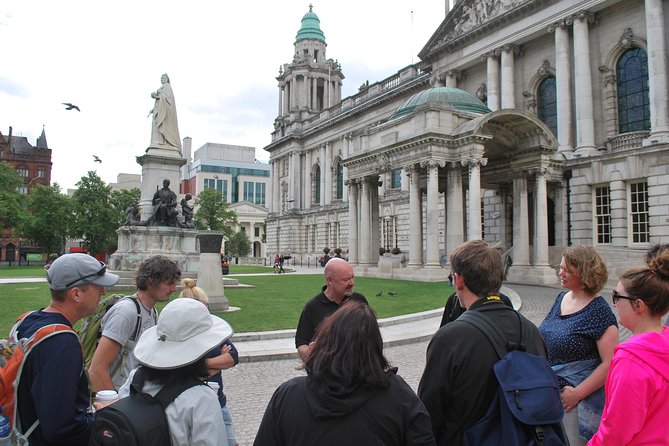
This tour has a smart rhythm. You begin at Belfast City Hall grounds, and the guide sets the scene before you move. The early talk matters because Belfast does not make sense if you only know the headlines. You get the centuries old relationship between Britain and Ireland, then you zoom in on why violence escalated in the late 1960s.
I like this approach because it stops the tour from becoming a checklist of tragic events. You learn the background first, so later details land with weight instead of chaos. It also helps you notice patterns, not just dates. And because you are on foot right away, you are not sitting in one place, you are mentally gearing up for what you will see next.
The group stays together and you hear your guide clearly thanks to the included headset system. That is a small detail that makes a big difference on walking tours, especially in busier city-center spots.
More Belfast city walks:
- Private Black Taxi Belfast City Tour
★ 5.0 · 2,188 reviews - City Sightseeing Belfast Hop-On Hop-Off Bus Tour
★ 4.5 · 2,012 reviews - Belfast Hop-on Hop-off Tours
★ 4.0 · 223 reviews
Donegall Place and the Ring of Steel policing shift
Next you head to Donegall Place. On the surface, this is just a main shopping street. That is what makes it memorable: the guide helps you see the ordinary storefronts as witnesses to a far darker chapter.
Here, the focus is a bomb attack on a nightclub in 1971, and what came after. You also hear about what became known as the Ring of Steel, the hardened policing approach used during the Troubles. I appreciate that the guide does not treat this like a ghost story. You get a clear explanation of why security tightened, how it changed daily life, and how people experienced the city differently after that shift.
The practical upside for you is that this stop is short but information-dense. Even if you are the kind of traveler who usually thinks walking tours are too slow, this one keeps moving.
Castle Lane: the pedestrian precinct where the Troubles feel close
From there you move into Castle Lane, inside the pedestrian area. Now Belfast looks like countless other city shopping zones, which makes this part land hard. The guide explains the realities of life at the height of the Troubles, including a specific incident that still holds a strong place in local memory.
Since the tour stays on foot, you do not just learn about the Troubles in the abstract. You are physically in the same kind of streets where people would have gone about their day. That contrast is the point. It is also why the tour can feel intense even when you are just walking past modern buildings.
A consideration: this stretch is more about hearing and absorbing than taking photos. If you are prone to getting restless on history tours, plan for that. Keep your expectations grounded, because the stop works best when you listen.
The Spirit of Belfast artwork, nicknamed the Onion Rings
You then reach the Spirit of Belfast artwork, commonly known as the Onion Rings. The guide explains the intention behind it, resilience, and then ties it to a sequence of events that began in a bar nearby in 1971.
This stop is valuable because it bridges two things many visitors separate. It connects the symbolic to the historical. You are not only learning what happened, you are learning how Belfast has tried to express endurance in public space.
I also think this is a good mental pivot point. After heavier details, the tour uses place-based symbolism to reframe what you are seeing. It is still sober, but it gives your brain a place to stand before the next story-laden neighborhood.
A few more Belfast options side by side
- Private Political History & Murals Tour Belfast
★ 5.0 · 182 reviews - Belfast Political/history/troubles private taxi/cab tour
★ 5.0 · 69 reviews - Belfast Walking Tour: City Centre History, Troubles & Stories
★ 5.0 · 39 reviews - 1 Hour Express Belfast Taxi/Cab Tour History, Murals, Troubles
★ 5.0 · 17 reviews
Cathedral Quarter: street art, nightlife, and the road to peace
Next comes the Cathedral Quarter. This area is a regenerated part of Belfast and it is easy to see why people come here for nightlife and culture. Street art adds color and energy, and the area feels current.
But the guide keeps pulling you back in time, using the neighborhood as a stage for stories of significant events and discussions about the beginnings of the path to peace. You walk the streets and alleys while learning how the city’s trajectory shifted after years of escalating violence.
For me, the best part of Cathedral Quarter on this tour is that you get a sense of distance, not just tragedy. You can see the modern scene, then you hear how it grew out of a period people would rather forget. That is what turns the stop into more than a history lecture.
If you are the type of traveler who likes seeing how cities heal, this is one of the most satisfying segments. It gives you a clear before-and-after feeling without sugarcoating.
Ann Street and policing during the Troubles, then after the peace agreement
At Ann Street, the tour slows into another important reality check. You stand beside a major police station in Belfast and learn how Northern Ireland was policed during the Troubles. Then the guide explains how policing has changed since the peace agreement.
This is also where the tour connects history to the present in a concrete way. The guide touches on the potential impact of Brexit on borders, linking political decisions to real-world uncertainty. I like that it stays practical rather than abstract. You leave with a better sense that peace is not a switch. It is a continuing work, and politics keeps testing it.
One more reason this stop is worth your attention: it helps you understand that history is not just about events, it is about systems. Policing, security, and boundaries shape daily life, and you get that angle here.
Beacon of Hope on the Lagan waterfront, ending on resilience
The tour finishes near the waterfront on the banks of the River Lagan at the Beacon of Hope. This is a fitting ending point because the guide uses the location to compare Belfast today with one of the darkest days in its history.
You talk about how Belfast achieved fragile peace, then you look forward to what the future may hold. Ending like this matters. It keeps the tour from feeling like a descent with no exit ramp.
There’s also an easy practical win for you. The tour ends at Beacon of Hope on Oxford Street, and from there it is a short walk back to where you started at Belfast City Hall.
How long and how much walking, without the guesswork
The route is about 1.5 miles and Belfast city center is described as completely flat. That means you are not fighting hills or steps. It is still city-center walking, so wear comfortable shoes and give your feet a break when you can.
The duration is about 2 hours 30 minutes. That time includes brief stops at each point, plus guided explanation throughout. Even with the walking, a moderate amount of standing and listening is part of the design. Plan accordingly, especially if you know you tire quickly.
The small group limit is up to 25 people. Pair that with the included headset system, and the tour is usually easier to follow than large group city walks.
Price and value: what $36.06 buys you in Belfast history time
At $36.06 per person, this tour is priced like a focused guided experience, not a cheap “see the sights” walk. The value comes from three places.
First, you are paying for a local guide who can stitch political history to specific street locations. That kind of storytelling saves you from doing the homework yourself on day one.
Second, the headsets help you actually hear the details. On tours without audio, you end up constantly repositioning or missing parts. Here, your learning time stays intact.
Third, you cover multiple key sites that connect into a single storyline, from Belfast City Hall to Donegall Place, into the Cathedral Quarter, then across to Ann Street and the Lagan. You also get a clear final stop at Beacon of Hope that gives the tour emotional closure.
Demand is a good sign too, with the tour commonly booked about 24 days in advance. If you want a specific day or you travel at busy times, lock it in earlier rather than gambling on last-minute availability.
The guide factor: why names like James, Mylie, Anne, and Róisín matter
A History of Terror works or fails based on the guide’s delivery. The most praised tours share a few traits: clear explanation, sensitivity, and a balanced, non-sensational tone.
Guides you may encounter include people like James, Mylie, Anne, and Róisín. You can expect strong command of The Troubles and an ability to connect personal perspective to political history. Several guide styles also emphasize that the tour aims to present facts and both sides of the story, so you can form your own view rather than being handed a script.
One thing I would keep in mind: audio quality is crucial. The included headset system is part of the design, so if anything sounds off, tell the guide right away so the group can correct course quickly.
Weather and timing: dress for Belfast outdoors, not for a museum
The tour takes place regardless of weather. That means you should dress for street-level conditions, not ideal forecasts. A waterproof jacket is recommended for showers, and warm clothing is a good idea in winter months.
Because it is mostly flat and fairly short in distance, weather matters most for comfort, not mobility. Still, being cold or wet will make it harder to concentrate, and this tour demands concentration.
Starting at 10:30 am is also helpful. You get the day’s history early, then you can explore Belfast afterward with a stronger sense of what you are seeing.
Who this tour fits best
This is a strong match if you:
- Want to understand The Troubles in a structured, guided way
- Like walking tours that connect past and present, not just plaques and photos
- Prefer local storytelling, with clarity over controversy
- Appreciate city regeneration stories like the Cathedral Quarter and Beacon of Hope
It may be a tough match if you:
- Want a light, upbeat tour
- Get uncomfortable with topics involving bombings, policing, and loss of life
- Prefer long scenic walks with minimal standing and explanation
Should you book A History of Terror in Belfast?
Yes, if you want the best kind of Belfast orientation: a guided walk that teaches you why the city looks the way it does and how people moved from violence toward peace. The headsets, small group size, and stop-by-stop focus on major locations make the experience feel efficient for the time you spend outside.
I would book it especially if it is your first day in Belfast or if you want context before you explore neighborhoods on your own. Just go in ready for emotion and heavy history. That is part of what makes it meaningful, and it is handled with care.
FAQ
Where does the tour start and where does it end?
The tour starts at Belfast City Hall, Donegall Square N, Belfast BT1 5GS, UK. It ends at Beacon of Hope on Oxford Street, Belfast BT1 3NB, UK.
How long is the A History of Terror Belfast City Centre Walking Tour?
It lasts about 2 hours 30 minutes.
What is the walking distance and is the route flat?
The tour involves moderate walking, about 1.5 miles. Belfast city center is described as completely flat, so there are no hills or steps, but comfortable footwear is still recommended.
What is the minimum age to join?
The minimum age is 12 years.
Is the tour in English and do you get help hearing the guide?
Yes, the tour is offered in English. Headsets are included to help you hear the guide clearly.
What happens if the weather is bad?
The tour will take place regardless of weather. If it is canceled due to poor weather, you will be offered a different date or a full refund.
More Walking Tours in Belfast
- Belfast Political Tour-Conflicting Stories Walking Tour
★ 4.5 · 459 reviews - Best of Belfast Walking Tour
★ 5.0 · 399 reviews - Belfast Eclectic Walking City Center Experience, The Marti Way
★ 5.0 · 348 reviews - Belfast Troubles Murals Street Art and Peace Wall Walking Tour
★ 5.0 · 163 reviews
Just added around Belfast
- Private Guided Walking Tour in Belfast★ 3.5 · 3 reviews
- Epic Escape Room Adventure to Save King’s Landing in Belfast★ 5.0 · 3 reviews
- Experience the Antrim Coast and the Land of Giants – Private Tour★ 5.0 · 3 reviews
- Game of Thrones scene location inc Giants causeway from Belfast★ 5.0 · 3 reviews
- Belfast to Dublin Transfer★ 5.0 · 3 reviews
- Giants Causeway Tour From Belfast including Game of thrones sites★ 5.0 · 3 reviews
- Private Coast Tour in Belfast★ 5.0 · 3 reviews
- Shore Excursion: Giants Causeway and Belfast City Tour★ 2.5 · 3 reviews
Belfast City Tours, compared.
Shore Excursion from Belfast: Including Giants Causeway and Belfast City.
Read our review →
World Famous Belfast City Centre Black Cab/Taxi Tour 2 Hours
Read our review →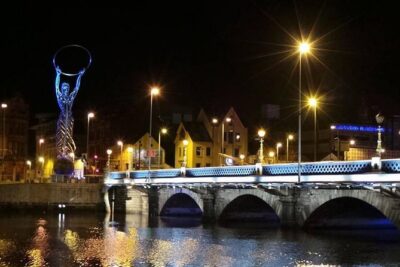
The Real Eclectic Belfast City Walking Tour/Experience.
Read our review →

Belfast City Airport (BHD) to Belfast Accommodation – Arrival Private Transfer
Read our review →
Shore Excursion: Giants Causeway and Belfast City Tour
Read our review →Browse the lists this tour appears in