
Reviewed · THE TROUBLES HISTORY TOURS
The Troubles Tour- Two Stories, One Journey
This experience is interesting because it walks you through Belfast neighborhoods where public art, memorials, and even street closures all carry the weight of the Troubles. In just a few hours, you connect the headlines to the street level, from Divis to Shankill Road. It is not a casual sightseeing loop.
I especially like that you get an up-close, story-led walk with two local certified guides, and that at least one guide, Barbara, shares personal reflections alongside the timeline. I also like how much is free at each stop, so your money goes to the guidance, not admission fees.
The main thing to consider is that it is mostly standing. You will walk about 3 miles (around 4 km) and you will spend time at memorial-type locations tied to intense memories, so it is not the best choice if you want a light, breezy outing.
Key highlights you should know
- A tight 3-hour route covering Divis, the Falls Road area, and Shankill Road, about 3 miles (4 km)
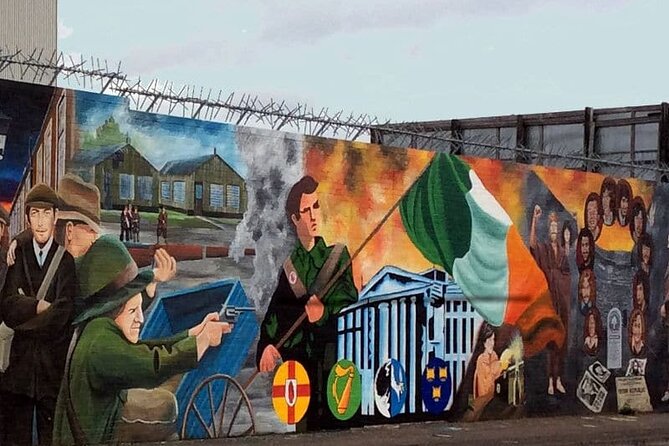
- Murals and memory sites tied to both Republican and Loyalist communities, including Bobby Sands and UVF remembrance
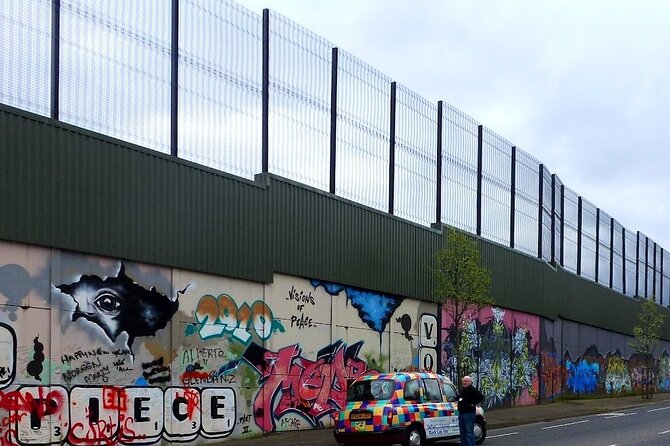
- The Peace Wall moment where you can sign the 14m-high wall and leave your thoughts on peace
- Clonard Monastery and Fr. Alex Reid linked to the talks that led to the Good Friday Agreement
- Gates between Shankill and Falls roads that still close nightly, a living detail of today’s Belfast
- Small-group feel with a maximum of 25 people, plus two local certified guides
How the route works: Divis to Shankill in about 3 hours
Plan on a focused, guided walking tour, not a hop-on hop-off bus day. The route is about 3 miles (4 km) total over roughly 3 hours, and you will spend plenty of time upright at stops where the guide needs you near the details.
You start at 30 Divis St, Belfast, BT12 4AL and finish at Conor’s Corner, 1 Northumberland St, Belfast, BT13 2JR. That end point matters because it is not right back at the start, so give yourself time to get back into the city center if you have dinner plans. A taxi company is conveniently located at the end area if you need a quick connection back toward City Hall.
All stops listed on the route are free to enter, and you get a mobile ticket. The tour is offered in English, and it runs with a max group size of 25, which helps the guide keep the conversation grounded and keep pace on a route that has quite a few short stops.
Finally, this is the kind of tour where your questions get better as you walk. The guide’s job is to connect place to context, and you do not need to arrive with deep background knowledge to follow along.
Other Troubles history tours, told plainly:
- Belfast’s Political Mural Taxi Tour
★ 5.0 · 1,180 reviews - Belfast Troubles Tour: Walls and Bridges
★ 5.0 · 853 reviews - Belfast Political Tour-Conflicting Stories Walking Tour
★ 4.5 · 459 reviews
Divis: observation towers and the night the Troubles began
Divis is a strong first stop because it gives you Belfast’s vertical angle. Divis was the tallest building in Belfast and it housed a British Army observation building on its roof. Even if you are not a history buff, that detail helps you picture how people watched, measured risk, and reacted in those early days.
The guide also ties Divis to the opening violence of the Troubles. The location is described as being tied to the first deaths on the night the Troubles broke out in August 1969. Standing there at the start, you feel how a single night can turn into decades of neighborhoods remembering and reenacting grief.
From a practical point of view, start your camera off for a minute. The best way to enjoy this part is to listen first, then look. If you try to photograph everything immediately, you might miss the way the guide frames why this tower mattered, not just that it existed.
If you are sensitive to heavy topics, it helps that the tour moves on quickly after the initial framing, so you are not stuck processing one moment for the full day.
Murals on Divis Street and the Lower Falls Road memory gardens
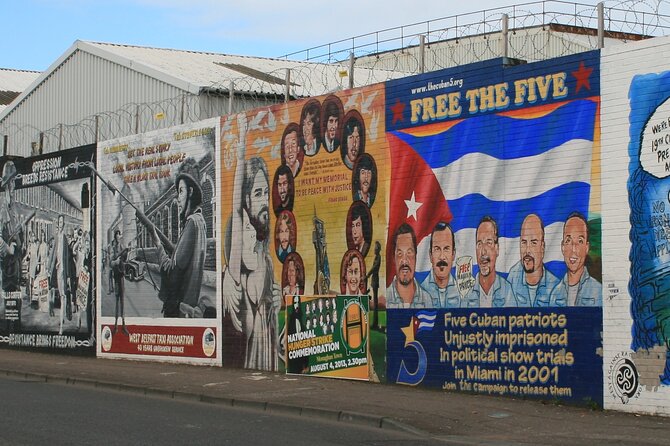
Right after Divis, you shift to street-level storytelling with the International Mural Wall on Divis Street. This is where Belfast becomes a visual newsstand. You will see murals depicting local events plus international conflicts, both past and present.
That mix is important. It is easy to think of the Troubles as only a local story, but the wall nudges you to notice how conflicts travel across borders and how people borrow language, symbols, and images to express fear, solidarity, or anger.
Next come the memorial gardens, and this is where the tour becomes emotionally specific. At the Garden of Remembrance, you learn about local Republicans who lost their lives in the conflict from the Lower Falls Road area. It is described as one of two memorial gardens that we visit, and it can be controversial because it honors the dead of IRA members.
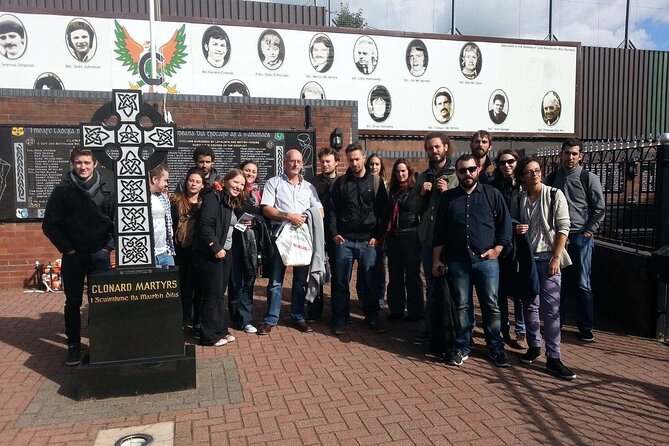
Then the tour builds the same idea from a different direction at the Clonard Martyrs Memorial Garden. This garden is dedicated to Republicans of The Clonard area and is generally accepted as the location where the Troubles broke out in August 1969.
If you only want one side of the story, this section may feel like too much. But if you want reality, you get it here. The gardens are part memorial, part argument, and you learn how remembrance can shape politics long after the violence ends.
Bobby Sands mural and Clonard Monastery’s link to peace talks
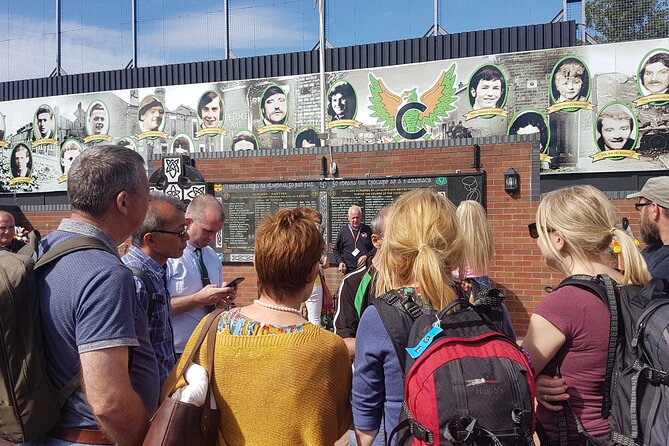
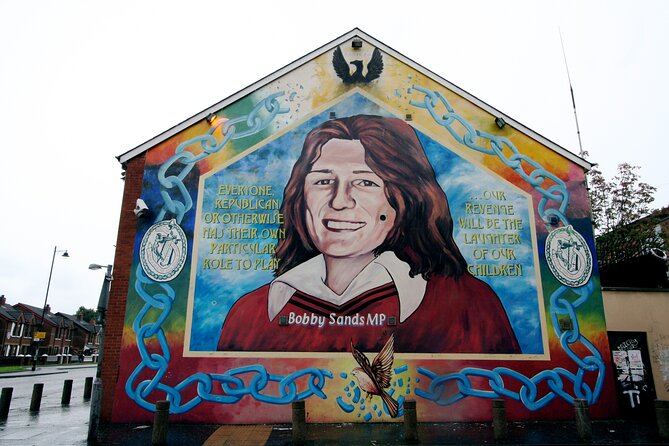
The Bobby Sands mural is one of the most famous stops on the route. You stand in front of a powerful image tied to Bobby Sands, who died on hunger strike in the Maze prison in 1981.
This is not a lecture in dates, it is a lesson in how symbols work. A mural keeps a name alive, and it also keeps a meaning alive, including anger, sacrifice, and the question of how societies remember political prisoners. Even if you know the name, seeing it in Belfast, in the middle of everyday streets, hits differently than reading about it.
A short walk later, you move to Clonard Monastery, and the story takes a turn toward diplomacy. You will hear about Fr. Alex Reid, the resident priest who was instrumental in the beginning of the talks that eventually led to the Good Friday Agreement being signed.
That matters because it prevents the day from becoming only memorial and retaliation. Instead, you see that the same neighborhoods that carry grief also carry the people and institutions that helped push negotiations forward.
In one of the guided experiences, Barbara is highlighted for making this feel personal and clear, with an insightful view of the Troubles plus reflections that go beyond the facts. I like that kind of guiding because it helps you hold complexity in your head without feeling lost.
More days out of Belfast:
- Titanic Belfast Entrance Ticket: Titanic Visitor Experience Including SS Nomadic
★ 4.5 · 3,698 reviews - Cab Tours Belfast Famous Black Taxi Tours
★ 5.0 · 3,633 reviews - Giant’s Causeway Day Trip from Belfast
★ 5.0 · 3,480 reviews - A History of Terror – Belfast City Centre Walking Tour
★ 5.0 · 2,883 reviews
The Clonard Martyrs Garden, closing gates, and the Peace Wall you sign
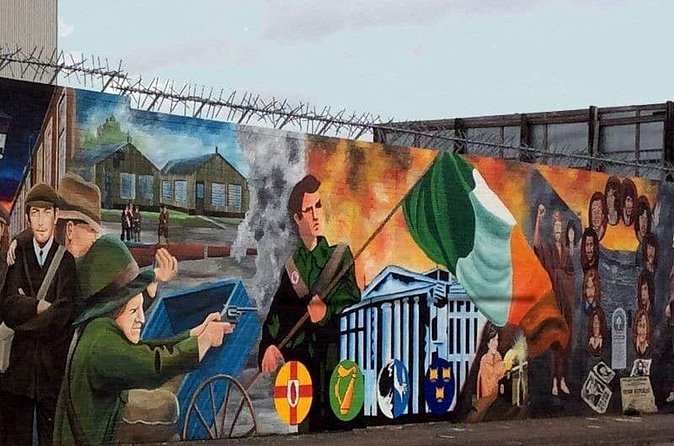
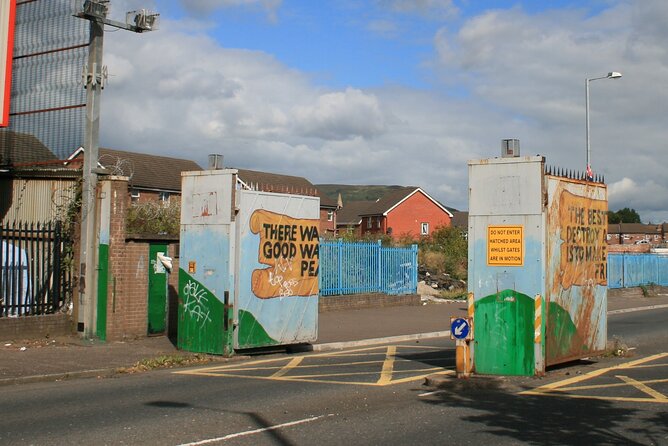
This part of the tour is where you see how the conflict remains physical. After the Clonard memorial garden, you look at the gates between the Loyalist Shankill Road and the Republican Falls road that still close nightly.
That detail can be hard to process at first, because it is not a statue or a mural. It is an operational feature of the neighborhood. It makes the idea of division feel current rather than historical.
Then the Peace Wall becomes the day’s interactive moment. You will stop at a 14m high Peace Wall, sign it, and leave your thoughts on peace. Admission for the stop is listed as free, and it is a simple activity that gives you something to do besides just listen.
To me, that signing moment is valuable because it shifts the experience from information to reflection. You are not erasing the past, and the wall is still a wall, but you get a chance to add a human response in real time.
Once you cross into the Shankill side of the story, the mood changes. The guide keeps the framing balanced, showing how each community uses its own symbols and commemorations. It is still one tour, but it starts to feel like two stories running side by side.
Shankill Road murals and the Shankill Bomb Site with nine lives lost
On Shankill Road, you begin with a UVF mural in remembrance of 7 members of the UVF who lost their lives in the conflict. Like the Bobby Sands mural, it is a public symbol that carries an interpretation of events. Seeing it after the Peace Wall gives you contrast: the wall asks for peace, while the murals also hold onto anger, loyalty, and loss.
Next is the Shankill Bomb Site, where 9 people lost their lives. This is one of those stops where the guide’s pacing matters. The tour lasts about 3 hours, so you do not get long speeches, but you do get enough to understand what the site represents and why people remember it.
I like that the route does not treat these as random monuments. It ties each location to how communities construct meaning, then it helps you connect those meanings to the larger arc of the Troubles and the push toward agreement.
In some versions of the experience, the tour ends with a visit to the Republic Museum, described as a must-see for anyone interested in the history of the Nationalist movement in Northern Ireland. If your schedule allows, this makes the whole day feel more complete because it gives you a place to keep learning after the walk.
Price, guides, and whether this is worth $23.36
At $23.36 per person for about 3 hours, this tour is priced like a city walk with real expertise. The value comes from two places: the guided storytelling and the fact that the key stops are admission free. You are not paying extra each time you arrive at a mural or memorial.
The other value is the guide style. One featured guide, Barbara, is praised for being informative and for offering personal reflections along with an insightful view, including the nationalist point of view. That blend matters because the Troubles can become a debate if you only chase facts, but it also becomes confusing if you only chase emotions. A good guide balances both.
Also note the group limit of 25. For a route with standing and short stops, that size keeps things moving without turning into a crowded jam.
I do think this price makes it a good choice for a first Belfast history tour, as long as you are okay with sensitive content and you can stand for a good portion of the time.
Should you book this Belfast Troubles Tour?
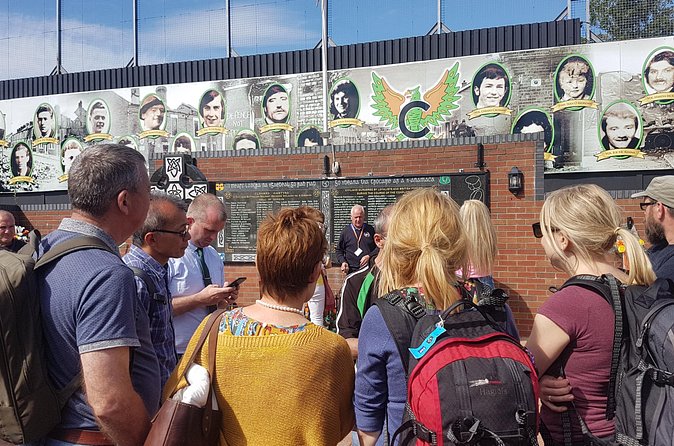
Book it if you want a focused, neighborhood-based walk through the symbols of the Troubles, not a generic history summary. The route hits Divis, the mural walls, both memorial gardens, Bobby Sands, Clonard Monastery and Fr. Alex Reid, the closing gates, the 14m Peace Wall, and key Shankill Road sites like the UVF mural and the bomb site. That is a lot to fit into 3 hours, and the guide structure helps it feel coherent.
Skip it if you want a light itinerary, or if the idea of memorial gardens and sites tied to loss feels too intense. It is also not ideal if you struggle with standing, since there is a lot of it along the way.
If you go, arrive ready to listen and take notes, not just photos. This tour works best when you let the places speak, then ask your questions when something clicks.
FAQ
How long is the Troubles Tour?
The tour is approximately 3 hours.
What does it cost?
The price is $23.36 per person.
Where does the tour start and end?
It starts at 30 Divis St, Belfast BT12 4AL, UK and ends at Conor’s Corner, 1 Northumberland St, Belfast BT13 2JR, UK.
How much walking is involved?
The tour is about 3 miles (4 km) of walking, with a lot of standing at stops.
What stops do you visit during the tour?
You visit Divis, the International Mural Wall on Divis Street, the Garden of Remembrance, the Bobby Sands mural, Clonard Monastery, the Clonard Martyrs Memorial Garden, the gates between Shankill and Falls roads, the Peace Wall, then stops on Shankill Road including a UVF mural and the Shankill Bomb Site.
Is admission included for the places on the route?
The tour lists admission tickets for stops as free for each of the listed sites.
How many guides are there?
You get two local certified guides.
Is the tour in English?
Yes, it is offered in English.
Are service animals allowed?
Yes, service animals are allowed.
What group size should I expect?
The tour has a maximum of 25 travelers.
Just added around Belfast
- Epic Escape Room Adventure to Save King’s Landing in Belfast★ 5.0 · 3 reviews
- Private Guided Walking Tour in Belfast★ 3.5 · 3 reviews
- Game of Thrones scene location inc Giants causeway from Belfast★ 5.0 · 3 reviews
- Experience the Antrim Coast and the Land of Giants – Private Tour★ 5.0 · 3 reviews
- Private Coast Tour in Belfast★ 5.0 · 3 reviews
- Belfast to Dublin Transfer★ 5.0 · 3 reviews
- Giants Causeway Tour From Belfast including Game of thrones sites★ 5.0 · 3 reviews
- Shore Excursion: Giants Causeway and Belfast City Tour★ 2.5 · 3 reviews