
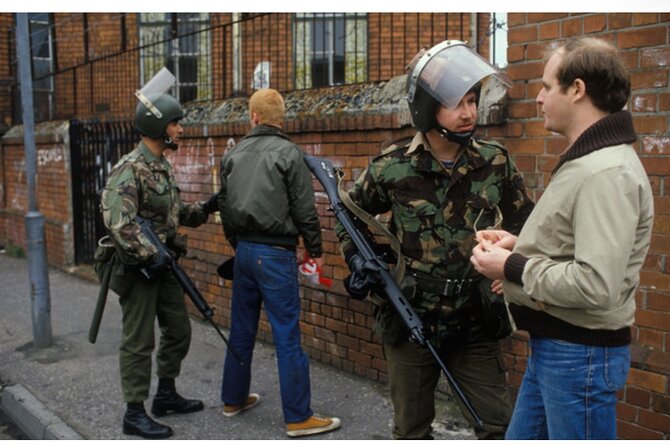
Reviewed · BELFAST MURAL TOURS
2 Hour Terror and Mural History Belfast taxi Private Tour
A 2-hour Belfast taxi tour like this is interesting because it stitches together the Troubles through what you can see right now, murals, memorials, and places tied to violence and the peace process. I love the short, tight route that keeps you moving street to street, and I love that the focus stays on how different neighborhoods remember the same conflict. It is also very practical, since you start and finish in central Belfast, with pickup options if you are staying near City Hall.
One possible drawback is that 2 hours moves fast. A few stops are emotional, and there is not much time to linger, so you will get the big picture more than you will get quiet reflection. If you like slow museum-style pacing, plan to do follow-up reading or another visit on your own.
Key Highlights You Should Actually Care About
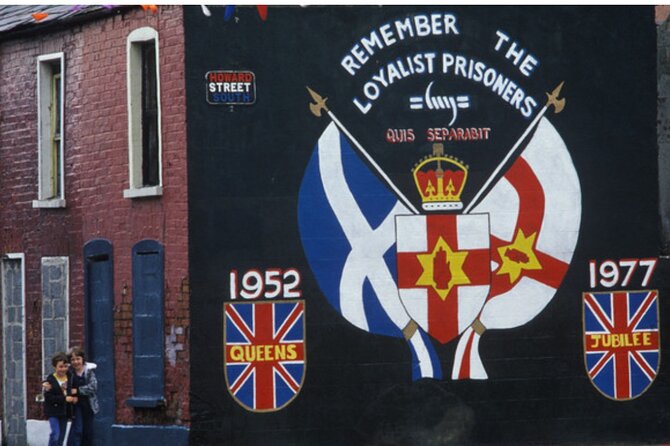
- A taxi route built for murals and memory, from the Peace Walls to Shankill Road
- Both sides of the conflict are explained, so you are not stuck in only one narrative
- Falls Road artwork that links local struggle to international human rights
- Divis Flats and Fort Apache, where a rooftop Army base turns surveillance into a lived experience
- Clonard Monastery and Father Alec Reid, peace-making through mediation and dialogue
- Crumlin Road Gaol and its tunnel to the courthouse, a physical reminder of how punishment and politics intersect
Why Belfast’s Murals and Walls Make Sense in a 2-Hour Taxi Tour
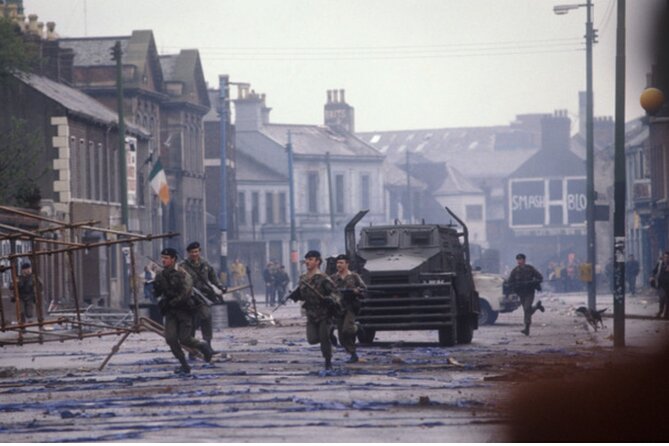
Belfast can be confusing at first. Streets look ordinary, but the meaning of a wall or a painted face can be anything but ordinary. This tour works because it does not ask you to figure it out alone. You get a guided pass through the key “memory sites” that locals still mark, defend, and mourn.
The taxi format also matters. It keeps you out of transit guesswork, and it helps you cover several neighborhoods in a short window. That means you spend time watching what you came to see, murals on brick and concrete, memorial plaques, and the shapes of walls that still control the city at night in places.
Other mural routes across the city:
- Belfast’s Political Mural Taxi Tour
★ 5.0 · 1,180 reviews - Famous 1.5 hour Belfast Murals Tour
★ 5.0 · 477 reviews - Belfast Murals Taxi Tour
★ 5.0 · 341 reviews
Price and What You’re Really Paying For
The price is $190.59 per person for about 2 hours. On paper, that can feel steep for such a short visit. The value comes from the fact that you are not just paying for a driver, you are paying for interpretation across multiple sensitive sites, plus timed entry where needed.
A few cost notes help you judge value:
- Parking fees are included, so you are not doing mental math on local fees.
- Admission is included for the Peace Wall stop, while the rest of the stops are listed as free.
- You get a mobile ticket and a scheduled route, which is important in a city where the sites are scattered and emotionally charged.
If you want a quick Belfast “Troubles and murals” foundation without doing homework before you arrive, this format can be a smart use of time. If you already know a lot and prefer long stops, you may want a longer tour instead.
Meeting Point and Pickup: Getting On the Right Taxi Without Stress
The tour meets at the Leonardo Hotel Belfast on Great Victoria Street, BT1 6DY. It ends back at the same meeting point, which is convenient if you are hungry, tired, or just want to hop back into your plans.
Pickup is offered. If you want pickup, you can arrange to be collected outside Belfast City Hall front gates. There is also free pickup within a 1 km radius from City Hall. The tour notes that there is no pickup from cruise ships because of distance from the Belfast city centre.
One small practical tip: confirm your pickup preference early. This tour is short, so you want to avoid delays that eat into site time.
Peace Wall Stop: Where Nightly Gates Still Shape Daily Life
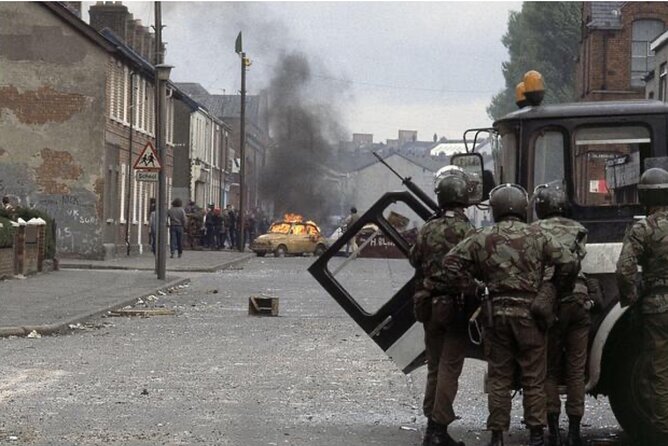
Your first major emotional anchor is the Peace Wall area. These barriers were erected during the Troubles starting in the late 1960s. At the time, their purpose was separation between Protestant and Catholic neighborhoods, built to reduce sectarian violence.
What makes the Peace Walls more than an old structure is that they are still part of the city’s rhythm. In some areas, gates close nightly. That turns history from something behind glass into something that affects where people walk, shop, and live today.
The guided focus here is usually the murals and graffiti too, not just the wall itself. You are learning how communities use street art and words to document fear, defiance, grief, and resilience. This is one of the few stops where you also get an admission ticket included, and it is worth paying attention to why certain spaces became “attention magnets” for conflict.
A few more Belfast options side by side
- A History of Terror – Belfast City Centre Walking Tour
★ 5.0 · 2,883 reviews - Private Political History & Murals Tour Belfast
★ 5.0 · 182 reviews - Belfast Political/history/troubles private taxi/cab tour
★ 5.0 · 69 reviews - Belfast Walking Tour: City Centre History, Troubles & Stories
★ 5.0 · 39 reviews
Divis Flats and Fort Apache: Surveillance Inside a Residential Neighborhood
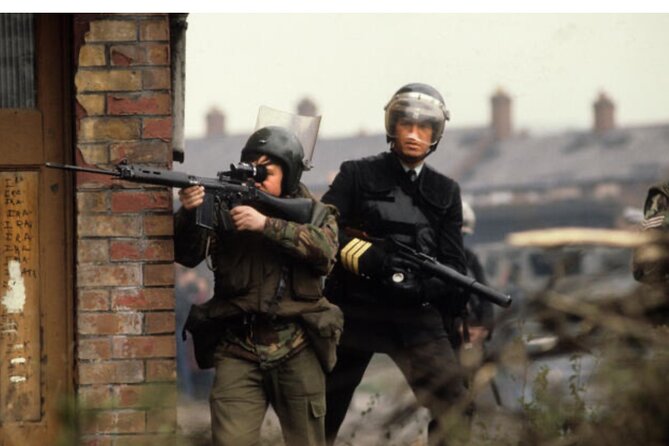
Next up is Divis Flats in West Belfast. These high-rise buildings were constructed in the late 1960s and became a hotspot during the Troubles, partly because the surrounding area was predominantly Catholic and tensions intensified with British security forces.
A key detail that makes Divis Flats so powerful is the rooftop Army presence. A British Army base was established on the rooftop of the tallest building. It carried the nickname Fort Apache, and it symbolized surveillance and tension, but it also meant the military presence was not off in the distance. It was physically part of daily life in a residential complex.
Your visit is short, but the story matters. You will see why hostilities were not only about clashes in the street, they were also about power, visibility, and control. The area today is remembered for the resilience of residents, and the guided framing helps you connect the past to the present without turning it into a simple good-versus-bad lecture.
Falls Road Murals: The International Wall and the Bobby Sands Tribute
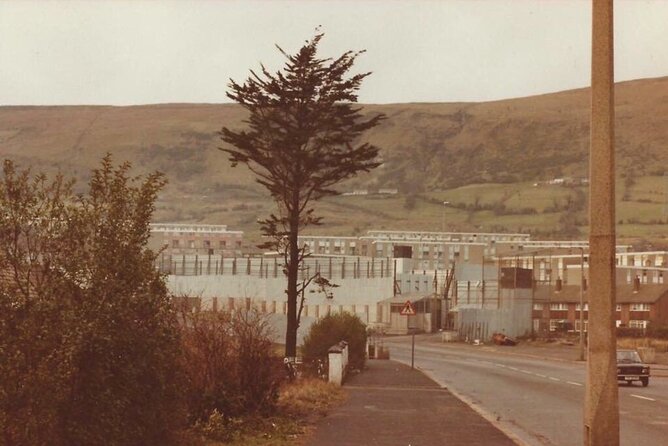
Falls Road is where Belfast’s street art can feel like a living archive. Two stops here are especially important because they show how murals can carry both politics and human memory.
International Wall on Divis Street
The International Wall on Falls Road dates to the 1980s. It is a long mural wall that addresses local and global issues, including the Troubles and wider human rights struggles. Each mural uses symbols and messaging that link Belfast to international movements and ideas about resistance and peace.
This stop is valuable because it keeps you from treating Belfast as an isolated story. You start to see how one conflict influences how people in other places understand oppression, protest, and solidarity.
Bobby Sands Mural
The Bobby Sands mural is one of the most iconic images on Falls Road. It memorializes Bobby Sands, a member of the Provisional Irish Republican Army (IRA) who died during a hunger strike in 1981. Sands was also elected as a Member of Parliament during the strike, which turned a prison-related event into a major political moment.
During the Troubles, the IRA was deeply active in the Falls Road area, involved in armed resistance and political activism. Today, that mural is both a historical marker and a lasting symbol tied to the quest for freedom and justice.
If you only skim, you might miss the layers. The guided context helps you interpret the mural as a message that different people read in different ways, and that is the point. Belfast’s murals often function like arguments written in paint.
Clonard Monastery and the Martyrs Remembrance Garden: Peace-Making in Church Brick and Quiet Green
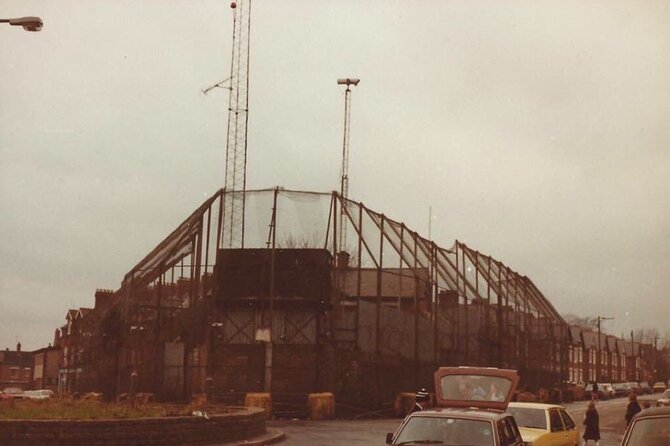
Clonard Monastery is a different kind of stop. It is in West Belfast, and it dates to 1896. The church became a beacon of hope during the Troubles, not by ignoring the conflict, but by supporting mediation and dialogue.
A standout name here is Father Alec Reid. He played a pivotal role in mediating between conflicting parties, and his behind-the-scenes work is described as important to dialogues that eventually helped lead to the Good Friday Agreement in 1998.
You also visit the Clonard Martyrs Memorial Garden right next door. This remembrance space honors people lost during the Troubles, many of whom were part of the Clonard community. Plaques and memorials sit among greenery, and the tone is intentionally reflective.
This pairing matters because it shows a second side of “history.” Not only are there murals and walls tied to violence, there are also places tied to negotiation and grief.
Crumlin Road Gaol: When the Past Is Still Built In the Same Stones
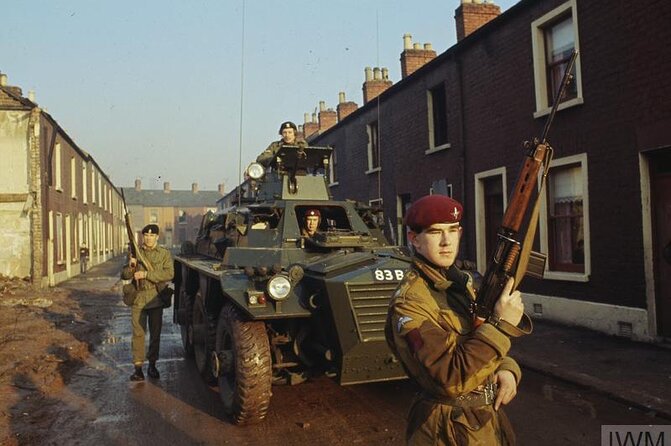
Crumlin Road Gaol and the Courthouse in North Belfast are historic landmarks tied directly to the Troubles. The gaol dates to the 19th century and held political and criminal prisoners, including members of the IRA and loyalist paramilitaries.
During the Troubles, it was a tense place. Escapes, hunger strikes, and riots were part of the period’s reality. One detail you should pay attention to is the tunnel that connected the jail to the courthouse. It is a concrete, physical symbol of how prisoners moved toward trials and sentences, underlining how justice and politics collided.
This stop gives you perspective that murals sometimes cannot. Murals show memory. The prison shows mechanics. It explains why certain stories became so intense, because incarceration was not a distant event, it was part of the conflict’s ongoing structure.
Belfast Peace Lines, Bombay Street, and the Birth of the Provisional IRA
Next is Bombay Street, described as the birth place of the Provisional Irish Republican Army in 1969. In August of that year, intense sectarian riots erupted and homes on Bombay Street were widely destroyed. Many Catholic families were displaced, and that displacement is presented as tied to feelings that they were abandoned by the state and by existing IRA structures.
In response, a faction broke away to form the Provisional IRA. The stated focus was defending nationalist communities and pursuing Irish reunification through armed resistance. This period and these events are important because they helped shape the trajectory of the Troubles in the years that followed.
The modern visit includes memorials and restored homes. That mix is important. You are seeing how a place can recover physically while still keeping strong reminders of what happened.
Shankill Road Murals: Loyalist Paramilitary Origins in Paint
Shankill Road adds the other side of the story. It is described as the birthplace of the Ulster Volunteer Force (UVF) and the Ulster Freedom Fighters (UFF). These loyalist paramilitary groups emerged as the conflict escalated in the late 1960s and early 1970s, aiming to maintain Northern Ireland’s union with Britain.
Key names and dates matter here. The UVF was initially formed in 1966. The UFF was established in 1973 as a cover name for the Ulster Defence Association (UDA). That detail helps you understand that labels were often strategic.
The murals along Shankill Road depict loyalist perspectives. They commemorate key figures, events, and ideals of the loyalist cause. Guided context helps you read the murals as political storytelling, not just decoration, and it also helps you see how the Troubles are remembered differently depending on which street you grew up on.
How to Get More Out of the 2 Hours You Have
Because time is limited, you will get the most if you come with two small mindsets.
First, treat each stop as a piece of the same puzzle. Peace Walls explain separation. Divis explains surveillance. Falls Road explains political symbols. Clonard explains mediation. Crumlin explains incarceration. Bombay Street explains the breaking points. Shankill explains the counter-narrative. Together, it starts to make sense.
Second, ask yourself what the site is trying to protect. Murals protect identity and memory. Walls protect neighborhood boundaries. Memorial gardens protect names and relationships. Prisons protect a system, and they also reveal how systems operate during conflict.
If you are sensitive to heavy topics, go in with that honesty. This tour handles serious material, but the guided approach aims to explain the conflict in a balanced way, including how people on different sides understood their actions.
Who This Tour Is Best For
This works especially well if:
- You want a fast Belfast introduction to Troubles history through murals and place-based sites.
- You prefer seeing neighborhoods by taxi instead of stitching together public transit.
- You like guided context and interpretive storytelling, especially around Belfast’s political art.
It may not be the best match if:
- You want a slow, time-rich visit to fewer locations.
- You need long quiet time at sensitive sites, rather than moving on schedule.
Should You Book This 2-Hour Taxi Tour?
I think you should book if you want a concentrated, guided route that connects Belfast’s Peace Walls, Falls Road murals, Clonard’s peace work, and Crumlin Road Gaol into one coherent story. The value comes from the focus: you are not wandering randomly, you are seeing the places that shape how the city remembers itself.
Skip it if your top priority is lingering at sites like museums or memorials for long periods. This tour is efficient, and that means you will feel the pace.
If you are on the fence, here is the deciding question: do you want help reading Belfast’s street-level history in real time? If yes, this is a smart use of a short visit.
FAQ
How long is the 2 Hour Terror and Mural History Belfast taxi private tour?
It runs for about 2 hours.
What is the price per person?
The price is $190.59 per person.
What language is the tour offered in?
The tour is offered in English.
Where is the meeting point?
The meeting point is the Leonardo Hotel Belfast, Great Victoria St, Belfast BT1 6DY.
Is pickup available?
Yes, pickup is offered. You can be collected outside Belfast City Hall front gates, with free pickup within a 1 km radius from City Hall.
Does the tour include admission tickets?
Admission is included for the Peace Wall stop. The other listed stops show free admission.
Are parking fees included?
Yes, parking fees are included.
Is coffee or alcohol included?
No. Coffee and/or tea and alcoholic beverages are not included.
Can I cancel for a full refund?
Free cancellation is available. You can cancel up to 24 hours in advance for a full refund.
Just added around Belfast
- Epic Escape Room Adventure to Save King’s Landing in Belfast★ 5.0 · 3 reviews
- Private Guided Walking Tour in Belfast★ 3.5 · 3 reviews
- Game of Thrones scene location inc Giants causeway from Belfast★ 5.0 · 3 reviews
- Experience the Antrim Coast and the Land of Giants – Private Tour★ 5.0 · 3 reviews
- Private Coast Tour in Belfast★ 5.0 · 3 reviews
- Belfast to Dublin Transfer★ 5.0 · 3 reviews
- Giants Causeway Tour From Belfast including Game of thrones sites★ 5.0 · 3 reviews
- Shore Excursion: Giants Causeway and Belfast City Tour★ 2.5 · 3 reviews