
Reviewed · BLACK TAXI TOURS
Original Private Belfast Troubles and Peace Cab/Taxi Tour 2 Hours
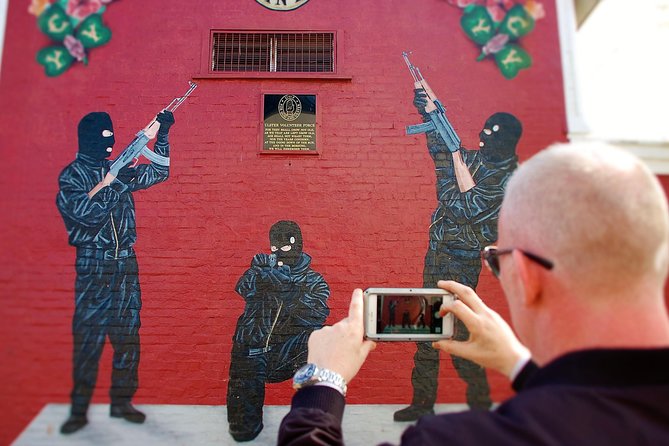
Belfast can feel like a city built in layers, and this private black taxi tour is one of the clearest ways to read those layers fast. You’ll move through streets marked by murals and political walls, with a guide who can explain what the symbols meant on the ground, not just in books.
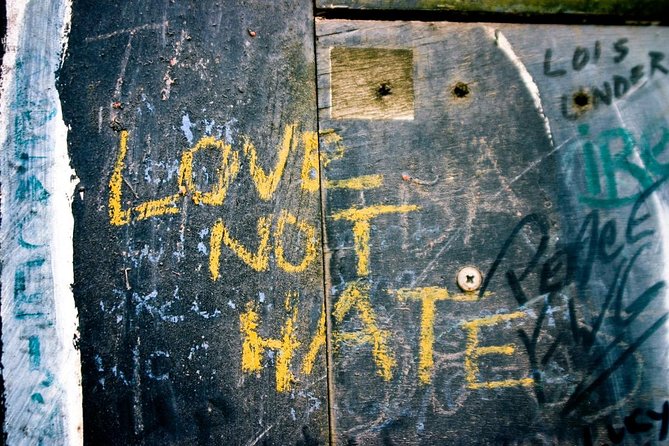
Two things I really like: you get real storytelling from someone with firsthand experience, and the stops are designed so you can see the key visuals up close, including the famous Peace Wall where you can write a message. There’s also a nice practical side, with pickup offered near Belfast City Hall so you spend less time figuring out logistics.
One consideration: this is heavy subject matter. Even though the tour is structured and easy to follow, expect politics, conflict, and memorials tied to the Troubles, and plan your headspace accordingly.
Key things to know before you go
- You ride in your own black taxi, so the pace and photo stops stay flexible.
- The guide’s personal experience matters, and it shows in how they connect street art to real events.
- The Peace Wall is hands-on, with a chance to write your name and a quote.
- Divis Street’s international murals get repeated, so you’ll see different themes and messaging in the same area.
- Some stops list admissions as not included, so budget a little extra if entry fees apply.
- Pickup is centered on Belfast City Hall, with free pickup within 1 km and cash surcharges outside that zone.
Entering Belfast by Black Taxi, Murals, and the Peace Walls
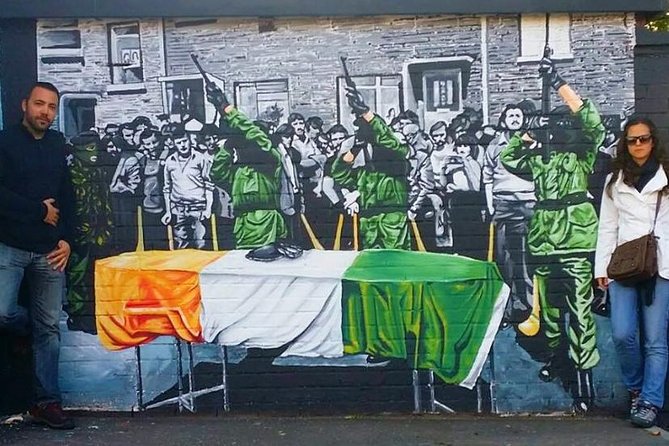
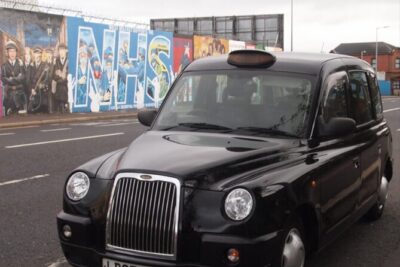
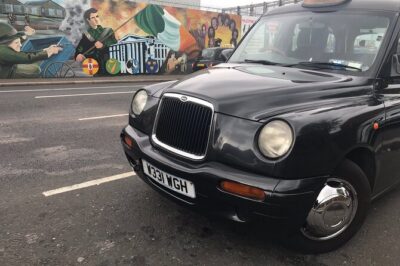
This is a 2-hour, private tour built around the street-level marks of Belfast’s past. Instead of stopping at a museum and moving on, you watch the Troubles unfold through what people chose to paint, wall in, carve, and memorialize. The vehicle is part of the point. A black taxi keeps you in motion through the neighborhoods that shaped the conflict, and it also gives you a natural rhythm for asking questions when something clicks.
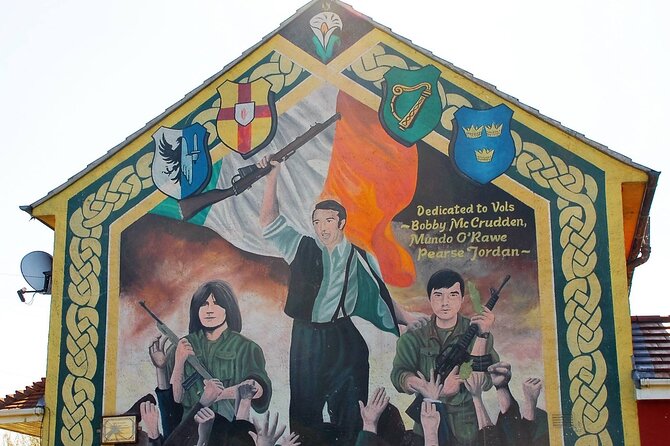
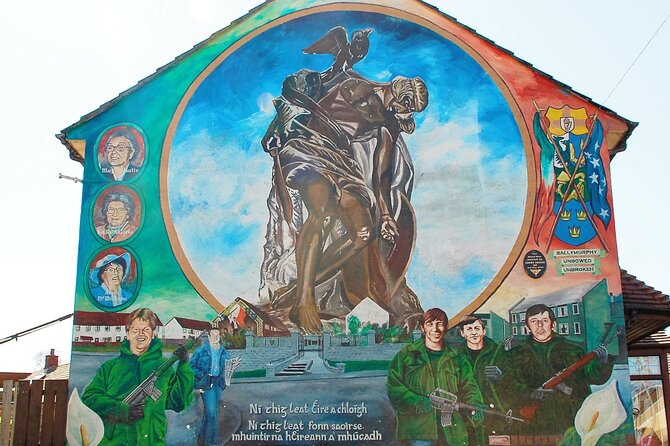
You’ll start at Belfast City Hall, then head straight toward areas tied to both Republican and Loyalist communities. The route is timed to keep it from feeling rushed, but it still hits the big visual anchors: murals on Divis Street, the Bobby Sands mural area, a major Peace Wall, and key Loyalist territory on the Shankill Road side.
The tour’s value is that it tries to help you understand how a city can hold opposing narratives in the same space. That is easier when you can look at a wall, then immediately hear how a guide interprets it.
More black taxi routes:
- Cab Tours Belfast Famous Black Taxi Tours
★ 5.0 · 3,633 reviews - Private Black Taxi Belfast City Tour
★ 5.0 · 2,188 reviews - Belfast’s Political Mural Taxi Tour
★ 5.0 · 1,180 reviews
Price and timing that actually make sense for Belfast
At $122.09 per person for about 2 hours, this isn’t the cheapest option in Belfast. But it is private, and you’re paying for more than transport. You’re paying for (1) a local driver who can speak to what it felt like moving through those streets and (2) a route built for maximum interpretation per hour.
Also, the tour tends to sell faster than you might expect, often booked about 68 days in advance. That means if you want a specific time window, it’s smart to plan ahead instead of hoping to walk up later.
If you only have a short visit, this timing works because you’re getting the “map” of Belfast’s political geography: where murals cluster, where walls divide, and which streets are treated like symbols.
The starting point at Belfast City Hall, plus pickup rules that matter
Meet at Donegall Square North, Belfast City Hall. The good news is that the tour is set to end back at the meeting point, so you don’t have to worry about where you’ll be dropped.
Pickup is offered with one clear boundary: free pickup within 1 km of Belfast City Hall. If you’re staying outside that zone, you can sometimes arrange pickup for an additional cash charge, and you may have to request prices in advance if you’re farther out.
One more practical note: airport, train station, and cruise port pickups are not included, and any surcharge is paid in cash on the day. If you’re arriving late or unsure of your exact departure point, plan buffer time, because you’ll want the pickup details to match your reality.
Stop by stop: what you’ll see and why it matters
Other Troubles history tours, told plainly:
- Belfast Troubles Tour: Walls and Bridges
★ 5.0 · 853 reviews - Belfast Political Tour-Conflicting Stories Walking Tour
★ 4.5 · 459 reviews - Political Taxi Tour Belfast (1-7 People)
★ 5.0 · 294 reviews - 2 Hour Private Belfast Taxi Cab Tour of Troubles & Peace walls
★ 5.0 · 240 reviews
Divis Street International Mural Wall (first visit)
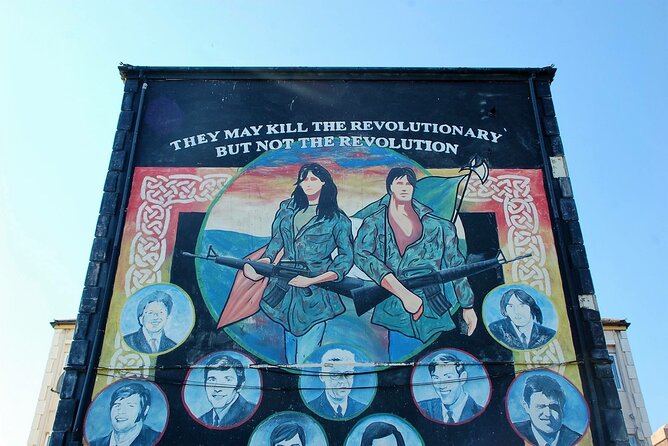
The tour heads to the huge international mural wall on Divis Street. This is the kind of place where you realize the murals aren’t just about Belfast. They also connect Belfast’s political identity to global conflicts and solidarity, with examples like references to Cuba, Palestine, and the Kurds.
The itinerary lists this stop as 10 minutes and notes that admission is not included. That doesn’t mean there’s always a paid ticket. It means if anything on-site requires entry, it’s on you to cover. What’s helpful is that you’re not sent on a long detour. You get a focused look, then you move on.
Why it’s worth your attention: murals like this are visual arguments. They explain who the community sympathizes with, and they signal what kind of political story the neighborhood thinks deserves attention.
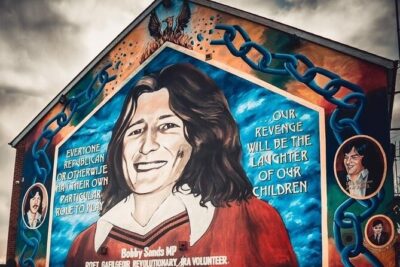
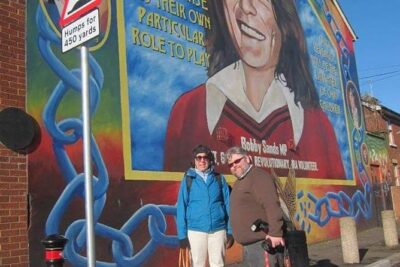
Bobby Sands Mural and the Falls Road context
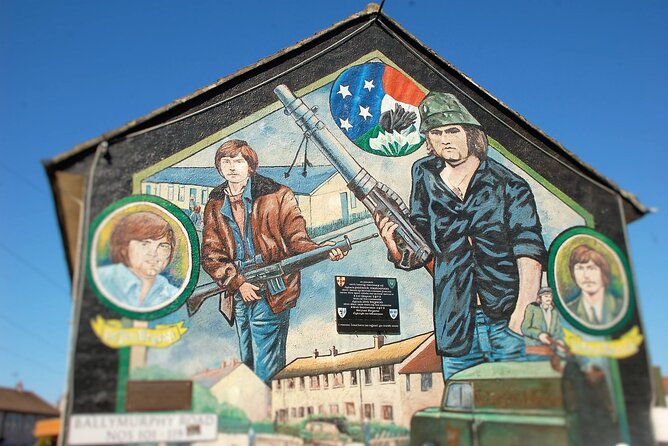
Next you’ll reach the Bobby Sands mural area. If you’ve ever heard the name tied to the hunger strikes, you’ll instantly understand why this is a landmark on the Falls Road side. The route is built so you can see murals that welcome you into the Republican community and are hand painted by local street artists.
You’ll also get a sense of how the guide thinks about danger and daily life, including what it was like driving through deadly streets. That kind of firsthand framing is one of the reasons this tour has such strong ratings.
This stop is listed as 15 minutes with admission free. That also helps the flow. You can stop, look closely, and ask questions without immediately worrying about entry rules.
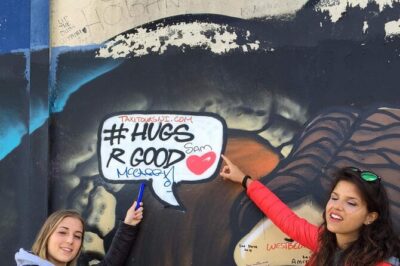
Peace Wall: the wall you can write on
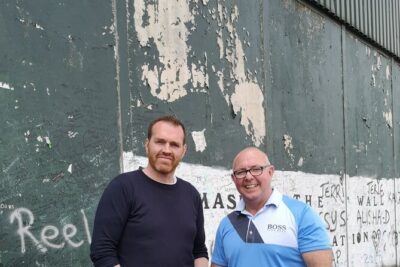
The big moment for many people is the Peace Wall, described as one of the biggest in Belfast. This is the divider that physically reflects political separation between Catholic and Protestant communities.
Here’s the hands-on part: you’ll have the chance to write your name and a quote on the barrier. Even if you keep it simple, that act turns the Peace Wall from a photo subject into something participatory and human.
The itinerary gives this stop 15 minutes, admission free. Plan for a bit of time taking photos, because this is one of those spots where your first picture never looks like your tenth one. You’ll want to capture the wall, the writing, and the mood of the area.
Bombay Street, 1969, and how streets become symbols
After the Peace Wall, the tour heads to Bombay Street, a key reference point because it was burned to the ground in 1969 by loyalist mobs and police. The stop is also described as the birth place of the Provisional IRA on those narrow streets.
This is one of the places where you’ll feel the weight of the word memory. The guide’s job is to explain why a street can take on a meaning far beyond its bricks, why an event can imprint itself into a neighborhood identity.
This stop is listed as 15 minutes, admission free. You’ll likely spend much of the time standing in the street view and letting the guide explain the timeline and factions.
Shankill Road: Loyalist heartland and a different narrative
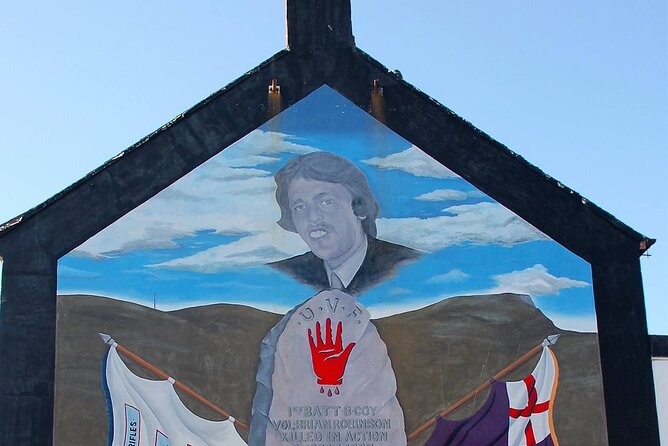
Then it’s over to Shankill Road, where the guide explains the origins of Loyalist groups including the UVF and the UDA. This is described as the heartland for that community and tied to the long conflict, including a struggle against the IRA over more than two and a half decades.
The itinerary calls this 30 minutes with admission not included. Again, that means you should be ready for possible paid entry tied to what you do on-site. If you just want the street views and mural context, you can often keep costs down.
Why it matters: you get the sense that Belfast history isn’t one story. It is competing stories, with different heroes, different harms, and different ways people interpret what peace should look like.
The Belfast gaol, from escapes to hangings
One stop includes a notoriously historical Belfast gaol, built in the 1800s. It’s described as a remand jail and housing IRA, UVF, and UFF prisoners, and the account notes it was a hanging jail up to the 1960s. The theme here is incarceration as a key part of the conflict, not just a side detail.
The listing doesn’t mark a ticket status for this specific gaol segment in the text you provided, so treat it as a spot where you might encounter entry rules once you’re there. If you want to go inside, ask on arrival what is included and what costs extra.
What you’ll likely take away: once you’ve seen murals and walls, going to a gaol gives you the darker infrastructure of the conflict. It makes the murals feel less symbolic and more like the visible layer of a real system.
St Peters Cathedral and a song tied to the Republican story
Next is Saint Peters Cathedral, built back in the 1800s, described as outstanding craftsmanship. The stop also connects to a cultural piece: a local priest penned the famous Republican song The Fog Drew.
This stop helps you balance the hard visuals with something that spreads through music and poetry. People grieve and argue through sound as well as paint.
The listing marks this stop as 15 minutes, admission free. That timing usually works well after the gaol, because you’ll want a calmer pause to absorb what you just learned.
Shankill Graveyard and photo time on political murals
Shankill continues with a stop at the Shankill Graveyard, described as stretching to lower and upper Shankill. This is where you get a chance to get out and take photos of the political murals painted on gable walls.
This stop is 15 minutes and admission free. Photo time is important here. Murals on gable walls often photograph well from street level, but you’ll want to adjust angles and distance, and you’ll have that chance during the stop.
Divis Street International Mural Wall (second visit)
The route returns to the international mural wall on Divis Street again, with the listing calling it a depiction of the plight of countries that don’t get media attention, including Palestine and Kurds as examples. Seeing this wall twice sounds repetitive, but in practice it helps the guide show different layers of meaning, since murals often read like short essays. One pass can be about symbols, another about messages and connections.
This stop is listed as 15 minutes, admission free this time.
Clonard Monastery: a quieter ending with a striking altar detail
For the final major stop, you’ll reach Clonard Monastery. The standout detail is the altar described as made of local women wedding rings, built by Italian and local men over 100 years ago.
The listing also notes your guide will bring you if you request it. So if you care about religious architecture or want that extra moment of stillness, be proactive. Ask your driver guide if you can spend a little time with the altar explanation.
This stop is 15 minutes, admission free, and it works as a reset after a route that covers division, violence, and political memory.
The guide factor: what you can hope for when the driver lived it
The strongest part of this tour is the person behind the wheel. Multiple guides have been credited for storytelling that feels grounded, with people highlighting that the driver lived through the Troubles and could share perspective from first hand experience.
You’ll also see a theme in names attached to top ratings, including Ricky, John, Brennan, and Brendan. The consistent note is that the guides aim for balance, not just a single faction view.
That balance matters because the Troubles are not a tidy topic. If you’re expecting a purely one-sided narration, this isn’t that. Instead, you get an explanation of how each community interprets its own story, even when the guide personally belongs to one side.
What to bring, and how to handle the emotional weight
A tour like this is visually intense and emotionally serious. You don’t need special gear, but you should bring practical basics:
- A camera or phone with enough storage for street photos
- Comfortable shoes, since you’ll be getting out for photo stops
- A willingness to pause and listen, especially at walls and memorial sites
If you’re sensitive to conflict imagery or want a lighter day, consider choosing a different Belfast tour. If you want to understand Belfast beyond postcards, this black taxi format is one of the most direct ways to do it.
Who should book this private Belfast tour?
This tour is a strong fit if you:
- Want a short, structured way to understand the Troubles across both communities
- Like history explained on the street, not just in a classroom
- Prefer private access where you can ask questions at the moment something feels confusing
It may feel like too much if you:
- Want a purely entertainment-focused city tour
- Prefer a less political approach
- Don’t like heavy topics like conflict, incarceration, or memorialization
Should you book this private Belfast Troubles and Peace Cab/Taxi Tour?
If you’re trying to get your bearings in Belfast fast, I’d say yes, with one caveat: go in prepared for serious content. The price is justified by the private black taxi format, the central pickup convenience near Belfast City Hall, and the guide experience that connects murals and walls to lived context.
Book it if you want the city’s political map, drawn in paint and stone, with time to stop for photos and ask questions as you go. Skip it if you need a light day, or if you know you’re not comfortable with reminders of violence and division.
FAQ
How long is the Belfast Troubles and Peace black taxi tour?
It’s listed as about 2 hours.
Is this tour private?
Yes. It’s private, so only your group participates.
Where does the tour start and where does it end?
It starts at Belfast City Hall on Donegall Square North and ends back at the meeting point.
Is pickup included?
Pickup is free within 1 km of Belfast City Hall. Pickup outside that area may involve a cash surcharge on the day.
Are tickets included for the stops?
Many stops are listed as admission free, but some stops show admission not included. Plan for the possibility of extra costs at those locations.
Do I need to speak English?
The tour is offered in English.
Do you use a mobile ticket?
Yes. A mobile ticket is included.
Can children join?
Children must be accompanied by an adult.
Is accessibility guaranteed for everyone?
The listing says most travelers can participate.
Can I cancel for a full refund?
Yes. You can cancel up to 24 hours in advance for a full refund. Canceling less than 24 hours before the start time is not refunded.
Just added around Belfast
- Epic Escape Room Adventure to Save King’s Landing in Belfast★ 5.0 · 3 reviews
- Private Guided Walking Tour in Belfast★ 3.5 · 3 reviews
- Game of Thrones scene location inc Giants causeway from Belfast★ 5.0 · 3 reviews
- Experience the Antrim Coast and the Land of Giants – Private Tour★ 5.0 · 3 reviews
- Private Coast Tour in Belfast★ 5.0 · 3 reviews
- Belfast to Dublin Transfer★ 5.0 · 3 reviews
- Giants Causeway Tour From Belfast including Game of thrones sites★ 5.0 · 3 reviews
- Giants Causeway Private Tour★ 5.0 · 3 reviews
Black Taxi Tours, compared.
World Famous Belfast City Centre Black Cab/Taxi Tour 2 Hours
Read our review →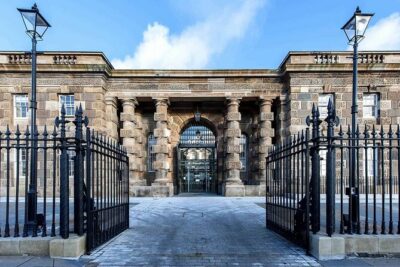
Black Taxi Tour and Crumlin Road Gaol tour Combo
Read our review →
Award Winning Exclusive 2 Hr Private Belfast Black Taxi Cab Tour
Read our review →Browse the lists this tour appears in